As an Etsy seller, you need embroidery files in a format that the machine understands. If you sell embroidered products, choosing the right file formats and keeping digitizing costs under control can make a real difference to your business.
This guide explains which embroidery formats Etsy sellers need, how custom embroidery digitizing works, what affects pricing, and when it makes sense to outsource the work.
Embroidery File Formats by Machine
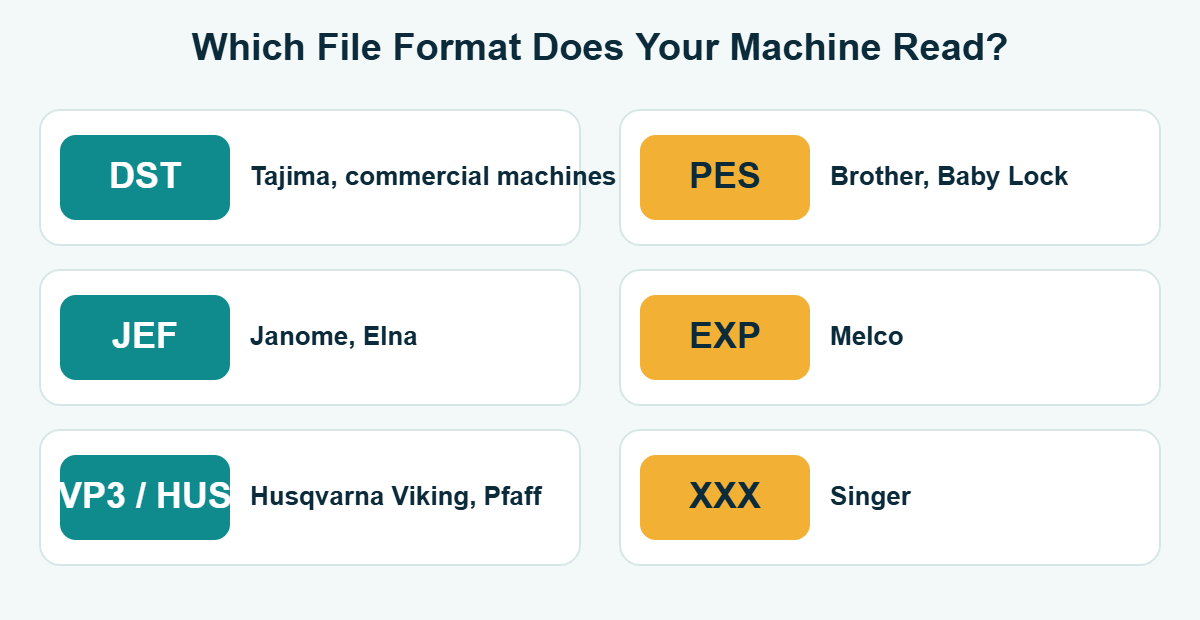
Embroidery machines don’t read JPGs or PNGs. They read stitch files that hold needle positions, color changes, trims, and jumps. Each machine brand has its own format.
| Format | Machine Brands |
|---|---|
| DST | Tajima; widely used on commercial machines |
| PES | Brother, Baby Lock, and some Deco machines |
| JEF | Janome and Elna |
| EXP | Melco |
| VP3, HUS | Husqvarna Viking and Pfaff |
| XXX | Singer |
| EMB | Wilcom’s editable working file; not a machine format |
Two points matter for Etsy sellers:
- Machine formats are not easy to edit. They store stitches, not shapes. If you need to resize or change text later, ask your digitizer for the editable working file as well, such as EMB from Wilcom.
- Converting formats isn’t the same as digitizing. Converting a DST to a PES keeps the same stitches. It doesn’t fix a badly digitized design.
For a full breakdown, see our guide to embroidery digitizing file formats.
Selling Products and Design Files
Etsy embroidery shops usually fall into one of two models:
| Model | What You Sell | What You Need |
|---|---|---|
| Physical products | Embroidered hats, sweatshirts, totes, patches | One production file per design, built for each item type |
| Digital design files | Downloadable stitch files | The same design in many formats and sizes, tested on a machine |
If you sell digital files, buyers own many machine brands, so offer the common formats: DST, PES, JEF, EXP, VP3 and XXX. Test-stitch every design before listing. A buyer who gets puckering or thread breaks will leave a review that says so.
If you sell physical products, remember that a cap and a flat sweatshirt need different files. Cap files are sequenced differently because the surface is curved. Our notes on cap embroidery problems explain why.
What Digitizing Costs Depend On
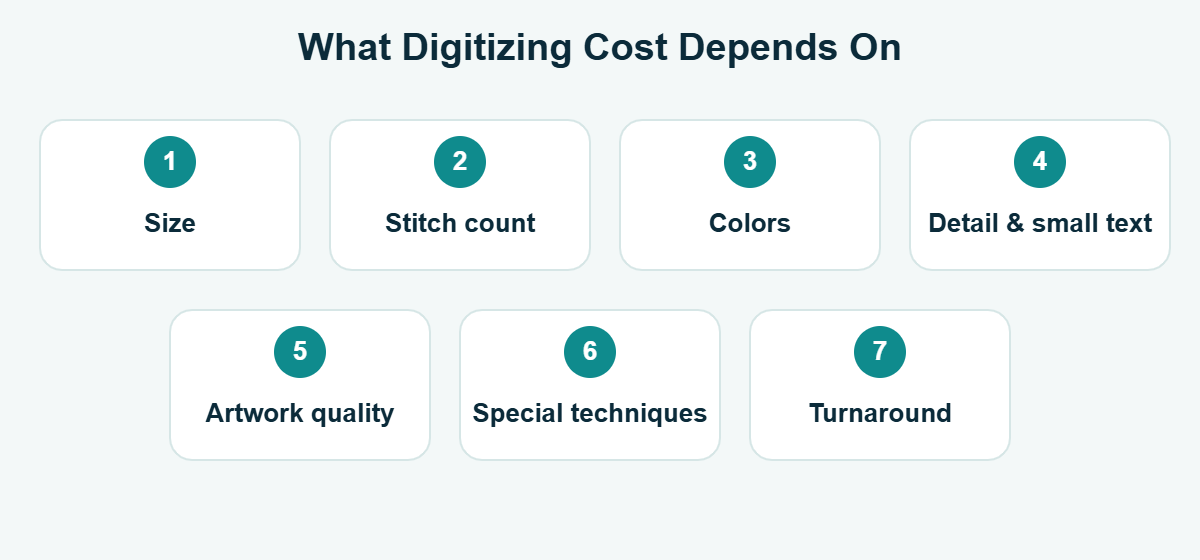
There is no single price for custom embroidery digitizing. Digitizers commonly price by stitch count or by design complexity. These are the main cost drivers:
- Size
- Stitch count
- Colors
- Detail and small text
- Artwork quality
- Special techniques
- Turnaround
The cheapest file isn’t always the cheapest digitizing in the end. A file that breaks thread or puckers costs you blanks and time on every order. For small shops, affordable embroidery digitizing services mean a fair price for a file that sews right the first time. To see typical numbers, read how much digitizing a logo costs or check our pricing page.
How Etsy Fees Fit Into Your Pricing
Your digitizing cost is a one-time cost per design. Etsy fees come out of every sale. Price for both.
According to Printful’s 2026 Etsy fee guide, US sellers pay:
- Listing fee: $0.20 per listing, active for 4 months or until sold
- Transaction fee: 6.5% of item price, shipping, and gift wrap
- Payment processing (US): 3% + $0.25 per order
- Offsite Ads (optional under $10,000 in yearly sales): 15% of the order, capped at $100
- Offsite Ads (required at $10,000+ in yearly sales): 12% of the order, capped at $100
Fees change, so check Etsy’s own fee page before you set prices.
Can You Sell Products Made from a Digitized Logo?
Only if you own the logo or have written permission to use it.
Digitizing a logo doesn’t change who owns it. The stitch file is yours to use, but the artwork and the trademark still belong to their owner. Etsy’s Intellectual Property Policy covers both copyright and trademark. Etsy can remove listings, and repeated notices can lead to shop suspension.
Safe options:
- Your own original designs. You own them.
- A client’s logo, made for that client. Get their permission in writing.
- Licensed designs. Follow the license terms for products, quantities, and markets.
What’s not safe: sports teams, cartoon characters, luxury brands, or “inspired by” versions of famous logos. Small changes often don’t avoid a trademark claim.
Digitize Yourself or Outsource?
DIY works for simple designs if you have the software and time to test. Outsource logos, small text, caps, and anything you’ll make repeatedly, where a clean file saves money on every order. If you are not sure how the process works, our guide on how to get your design digitized for embroidery walks through it step by step.
How Bulk Digitizing Saves Money
When you launch a collection, you often need many designs at once. Sending them together has practical benefits:
- Volume pricing. Many digitizers offer lower rates for bulk embroidery digitizing. Ask before you order.
- A consistent style. One digitizer keeps density, underlay, and lettering the same across the collection.
- One set of formats. Every design comes back in the same formats for your machine or your buyers.
- Fewer revisions. Once the digitizer knows your machine and fabrics, later files need fewer edits.
Get Etsy-Ready Embroidery Files
At Infinite Digitizing, we provide custom embroidery digitizing for Etsy sellers and small shops, in the formats your machine or your buyers need.
Launching a new collection?
Check our pricing and send your designs for a quote.
FAQs
1. What embroidery file formats should Etsy sellers use?
Use the format your machine reads: PES for Brother and Baby Lock, DST for Tajima and most commercial machines, JEF for Janome, EXP for Melco, and VP3 or HUS for Husqvarna Viking and Pfaff. If you sell digital designs, offer all the common formats.
2. How much does digitizing cost for an Etsy shop?
It depends on design size, stitch count, colors, detail, and turnaround. Many digitizers price by stitch count or complexity. Treat it as a one-time cost per design and spread it across the items you’ll sell.
3. Can I sell embroidered products made from a digitized logo?
Only if you own the logo or have written permission from the owner. Digitizing doesn’t transfer ownership of the artwork or trademark. Etsy can remove infringing listings, and repeated notices can lead to shop suspension.
4. Should Etsy sellers digitize designs themselves or outsource?
DIY works for simple designs if you have the software and time to test. Outsource logos, small text, caps, and anything you’ll make repeatedly, where a clean file saves money on every order.
5. How do bulk digitizing orders save money for small shops?
Many digitizers offer lower rates for volume orders. Bulk orders also keep the style consistent across a collection and reduce revisions, which saves time when you launch.