Leather doesn’t forgive mistakes. On fabric, a needle hole closes up. On leather, every hole stays, and a small area can collect many of them, so the design can cut right out of the hide.
Because of this, custom embroidery digitizing for leather needs three changes: the needle, the stabilizer, and the digitizing itself. This guide covers all three, plus hooping, machine speed, and how faux leather compares.
Why Leather Is Different
Fabric is woven or knitted. When a needle passes through, it pushes the threads aside, and they close back up.
Leather is a solid hide. Embroidery Library explains that a needle leaves permanent holes in leather, and the perforations don’t draw back together as they do on fabric. It also notes there is more friction between the needle and leather.
So the goal is simple: make fewer, cleaner holes, and spread them out.
Best Needle for Leather Embroidery
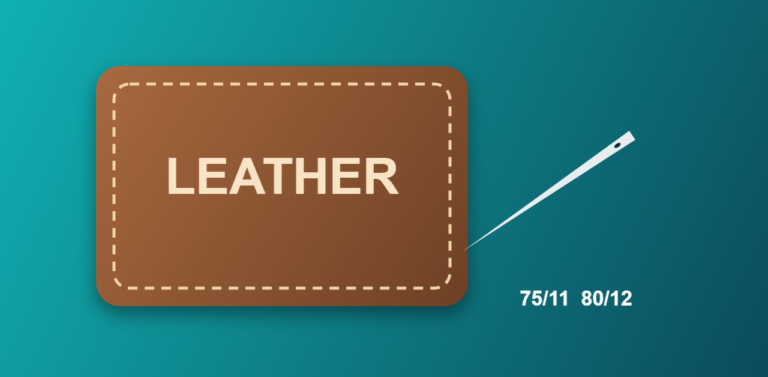
A leather needle has a small wedge-shaped point that cuts a clean slit instead of punching a round hole. A digitizer who knows leather can also help you choose the right needle before stitching.
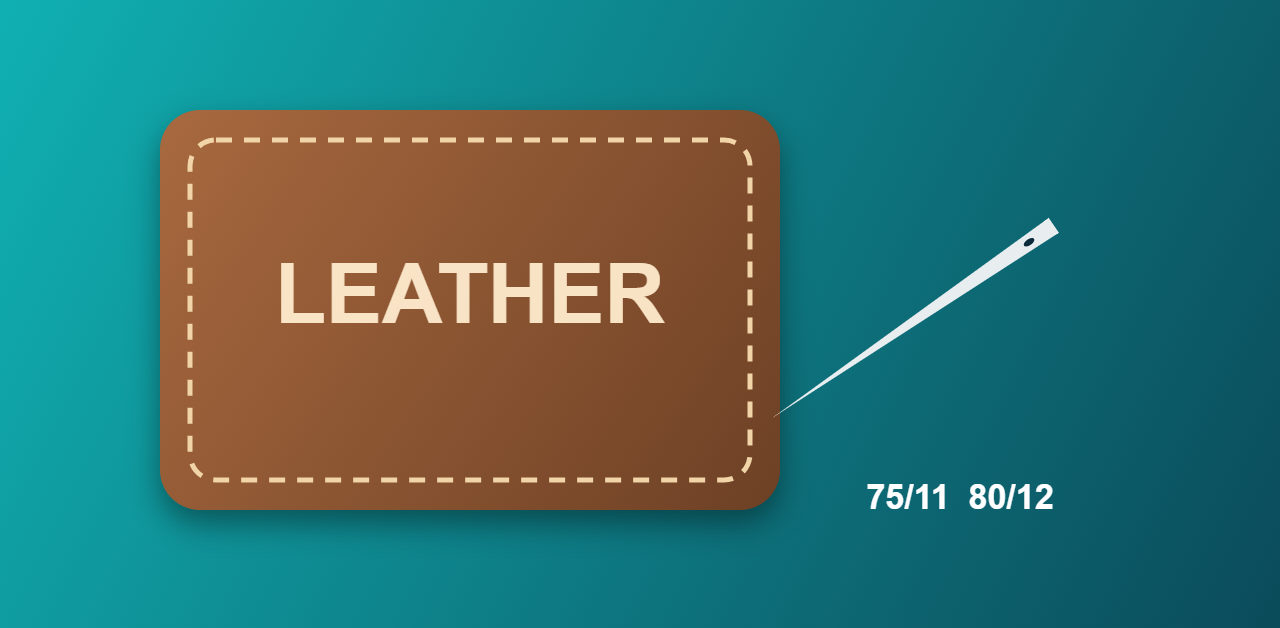
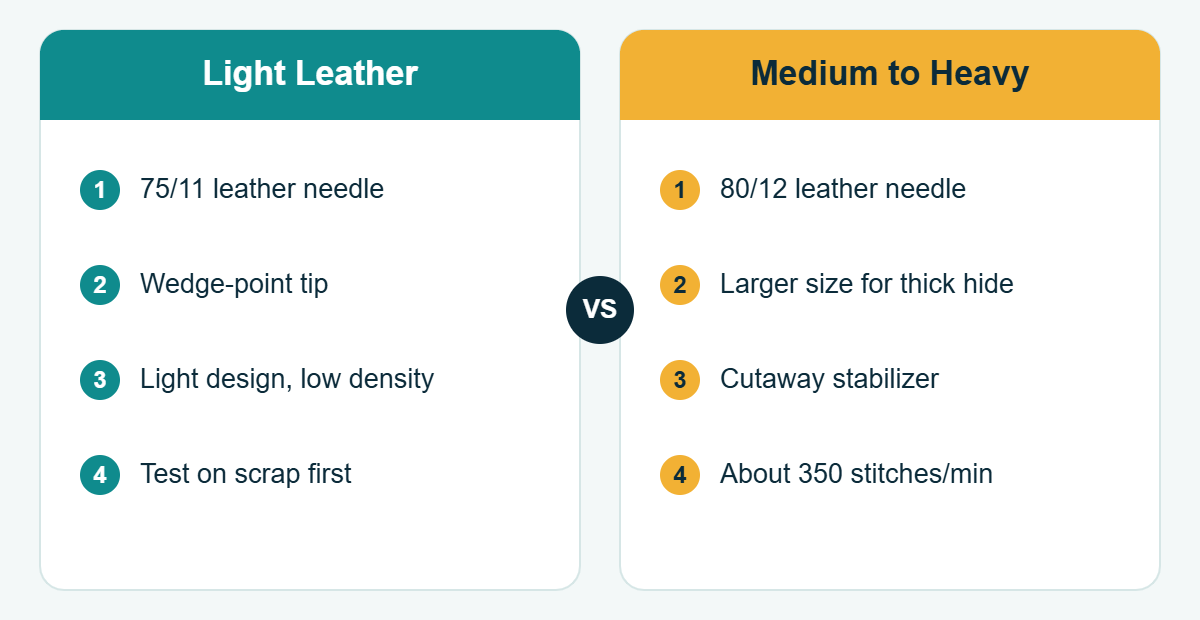
- Erich Campbell at Embroidery Legacy explains that a size 11/75 leather needle suits lighter leather, and a larger size suits thicker, heavier leather.
- Embroidery Library uses a size 80/12 leather needle because its wedged point reduces the size of the hole.
- Use a flat shank needle for home machines and a round shank needle for industrial machines.
| Leather Weight | Needle |
|---|---|
| Light, soft leather | 75/11 leather needle |
| Medium leather | 80/12 leather needle |
| Heavy, thick leather | Larger leather needle; test first |
If the slits start to join up into a tear line, stop and test on scrap. The usual fix is a lighter design or a smaller needle, not more stitches.
Best Stabilizer for Leather
Both AllStitch and Embroidery Library recommend a medium-weight cutaway stabilizer, bonded to the leather with temporary spray adhesive.
Cutaway stabilizer holds the leather together both during and after embroidery. That support matters because each needle hole weakens the hide a little.
For more on matching stabilizers to materials, see our guide to using different stabilizers for embroidery, and our notes on the best fabric for machine embroidery.
How to Hoop Leather Without Marks
A hoop can crush or scuff leather, and those marks may be permanent. Two methods help.
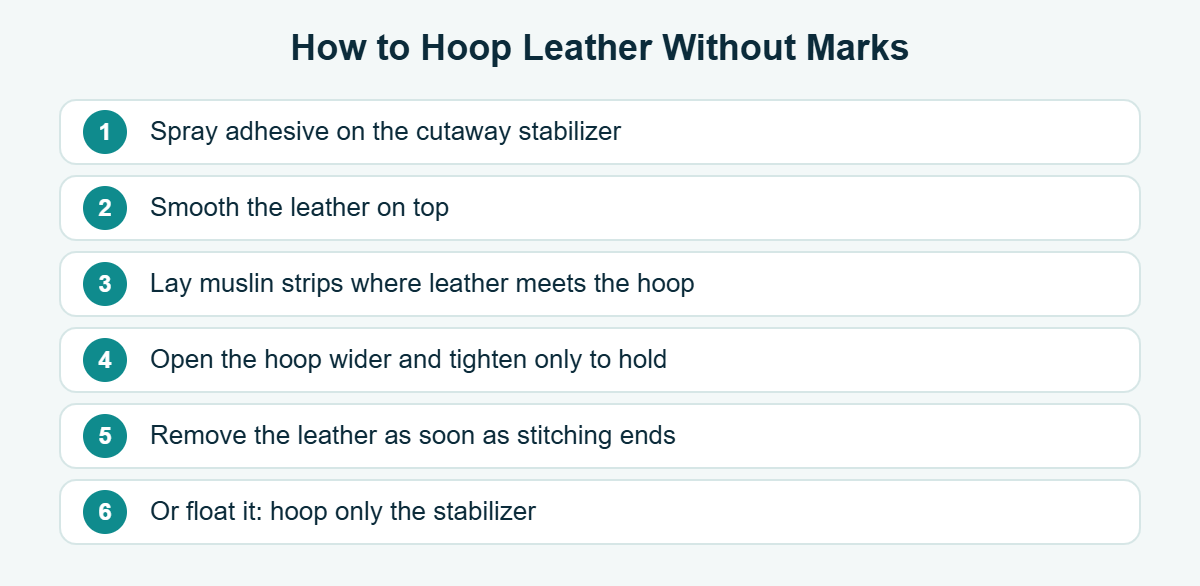
Protect and hoop lightly (AllStitch, Embroidery Library):
- Spray adhesive on the stabilizer and smooth the leather on top.
- Lay muslin or cotton strips where the leather meets the hoop, leaving the center exposed.
- Open the hoop slightly wider than usual and tighten only enough to hold.
- Remove the leather from the hoop as soon as stitching is done.
Float the leather:
- Hoop the stabilizer only.
- Place the leather on top of the hooped stabilizer, held with adhesive.
- Stitch without clamping the leather at all.
AllStitch also suggests a medium machine speed, around 350 stitches per minute, with the presser foot as low as possible to stop bouncing.
Digitizing Changes for Leather
The file matters as much as the needle. Leather needs a lighter touch than fabric:
- Lower density. Use lighter density and less underlay than you would on fabric.
- Open fills. Choose open fill patterns instead of solid, packed fills.
- Narrow satin columns. Wide satin areas add many holes in one spot.
- Few running stitches. Avoid heavy travel and repeated running stitches over the same line.
- Test first. Always stitch a sample on scrap leather of the same weight.
Faux leather follows the same rules. Some faux leathers can take slightly denser designs, but they can be heat-sensitive and still tear if over-stitched, so always test first. If you are making patches instead of stitching straight onto a garment, take a look at our custom leather patches.
Get Leather-Ready Digitized Files
At Infinite Digitizing, we offer custom embroidery digitizing services with files built for the material you’re stitching on. Tell us it’s leather, and we’ll adjust density, underlay, and stitch types for it.
Stitching on leather soon?
Send us your design and tell us the leather type and weight.
FAQs
1. What needle is best for embroidering on leather?
A leather needle with a wedge point. Use around 75/11 for light leather, 80/12 for medium leather, and a larger size for heavy leather. Use flat shank needles on home machines and round shank needles on industrial machines.
2. Which stabilizer should be used for leather embroidery?
A medium-weight cutaway stabilizer, bonded to the leather with temporary spray adhesive. It supports the leather during and after stitching. Sticky-back stabilizer works if you float the leather.
3. How should stitch density change for leather?
Use lighter density and less underlay than you would on fabric. Choose open fills, keep satin columns narrow, and avoid heavy running stitches, so fewer holes go into the hide.
4. How do you avoid perforating leather during embroidery?
Pick light designs, digitize at lower density, use a wedge-point leather needle, back with cutaway stabilizer, slow the machine to around 350 stitches per minute, and test on scrap first.
5. Can faux leather be embroidered the same way as real leather?
Mostly, yes. Use the same needles, stabilizers, and light designs. Some faux leathers can take slightly denser designs, but they can be heat-sensitive and still tear if over-stitched, so always test first.