Two identical patches can last different lengths of time. The difference is often the back, not the front. The backing decides how the patch attaches, which fabrics it works on, and how it handles washing.
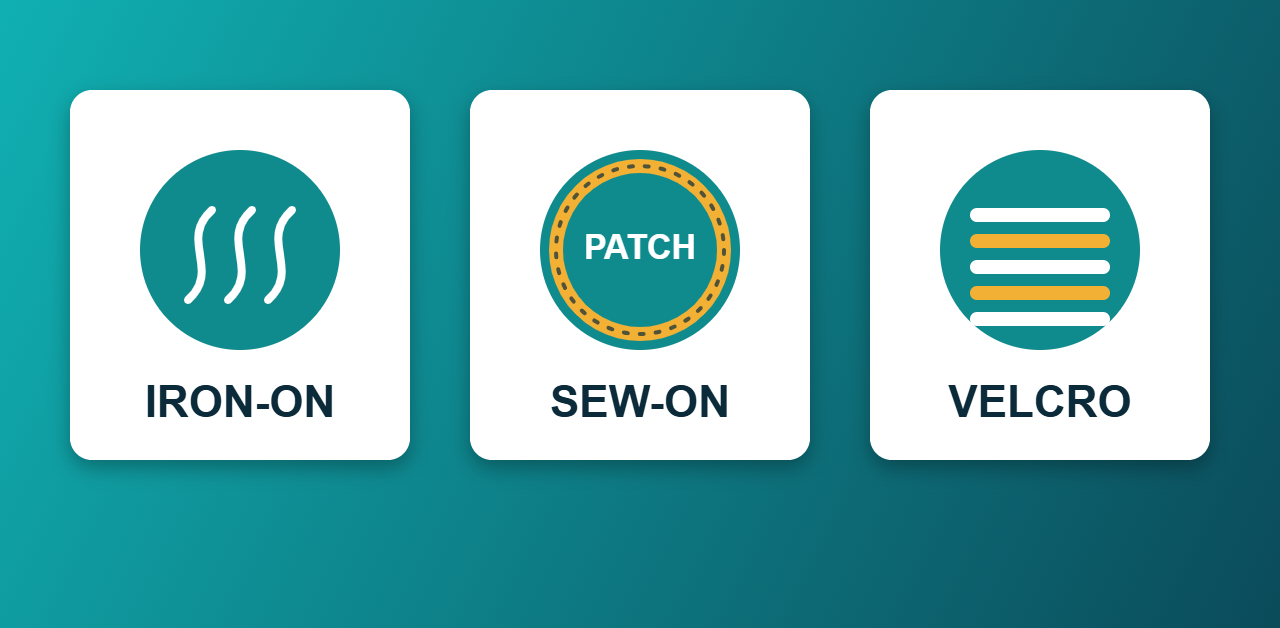
This guide compares the three main backing options for custom patches: iron-on, sew-on, and Velcro (hook-and-loop). It covers how each one works, how to apply an iron-on patch safely, which fabrics to avoid, and which backing fits uniforms and tactical gear.
Patch Backings
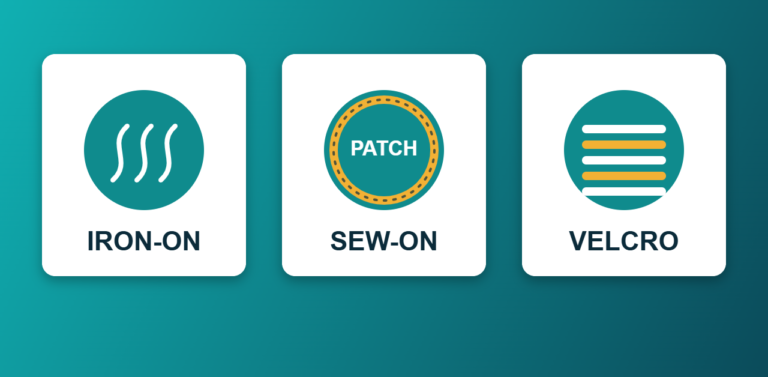
Patch backings are the different methods used to attach custom embroidered patches to a garment or other item. Here is how the three methods compare.
| Factor | Iron-On | Sew-On | Velcro |
|---|---|---|---|
| How it attaches | Heat-activated adhesive | Thread, by hand or machine | Hook side on patch, loop panel on garment |
| Skill needed | Low; an iron or heat press | Sewing skill or a tailor | Loop panel must be sewn on once |
| Removable | No | No | Yes |
| Wash durability | Adhesive can soften at the edges over time | Highest | Good; patch can be removed before washing |
| Best fabrics | Cotton, cotton blends, denim | Almost anything, including nylon, canvas and leather | Gear with a loop panel |
| Best for | Merch, gifts, denim jackets | Uniforms, workwear | Tactical gear, bags, ID and morale patches |
Iron-On Patches
An iron-on patch has a layer of heat-activated adhesive on the back. When you press it with a household iron or heat press, the glue melts into the fabric and bonds as it cools.
What iron-on offers:
- No sewing. Anyone with an iron can apply it.
- Speed. Good for merch, giveaways, and events.
- A clean look. No visible stitches on the front.
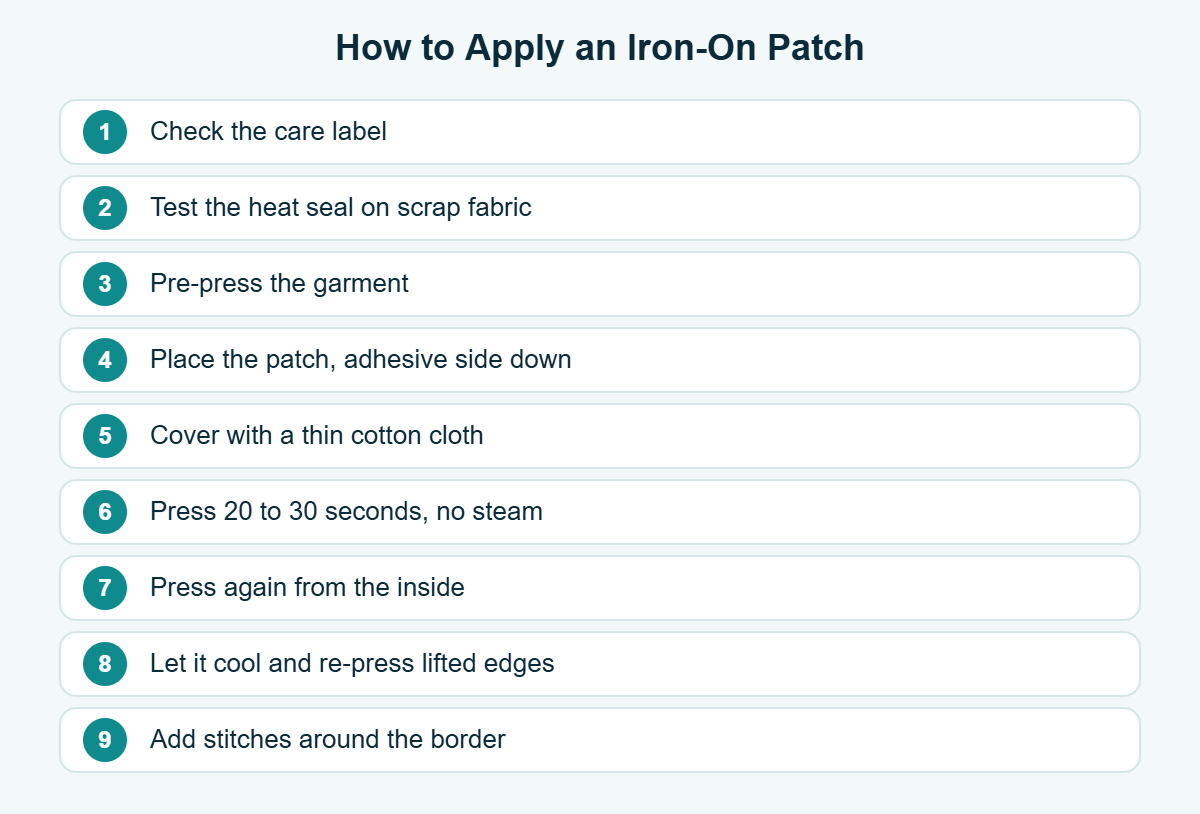
How to Apply an Iron-On Patch
- Check the care label. If the fabric can’t be ironed, don’t use an iron-on patch.
- Test first. Monterey Company recommends testing the heat-seal backing on scrap fabric.
- Pre-press the garment. Remove wrinkles and moisture from the spot.
- Place the patch. Adhesive side down, exactly where you want it.
- Cover it. Use a thin cotton cloth or pressing sheet between the iron and the patch. This protects the thread and the fabric.
- Press, don’t slide. Hold firmly in place for 20 to 30 seconds. Don’t use steam.
- Press from the inside. Turn the garment inside out and press the back of the patch area too.
- Let it cool. The glue sets as it cools. Check the edges and re-press any that lift.
- Add stitches for permanence. A few stitches around the border make it last much longer.
For more on which fabrics take embroidery well, see our guide to the best fabrics for machine embroidery.
Sew-On Patches
A sew-on patch has a plain or lightly stiffened back and is stitched onto the garment by hand or machine. It is the most traditional backing and the most secure.
What sew-on offers:
- The strongest hold. Patch & Bagel says sewn patches survive years of industrial washing, because nothing depends on glue.
- Any fabric. Works on nylon, canvas, leather, and technical outerwear.
- Heavy patches. Monterey recommends sew-on for military and police uniform patches, PVC patches, and thick embroidery.
Velcro (Hook-and-Loop) Patches
A Velcro patch has the hook side of a hook-and-loop fastener on its back. The garment or bag needs a matching loop panel, which is sewn on once.
What Velcro offers:
- Removable patches. It is the only one of the three backings you can take off and put back.
- Swappable designs. Change unit, name, rank, or morale patches without sewing.
- Easy washing. Remove the patch before the garment goes in the wash.
Which Backing Lasts Longest After Washing?
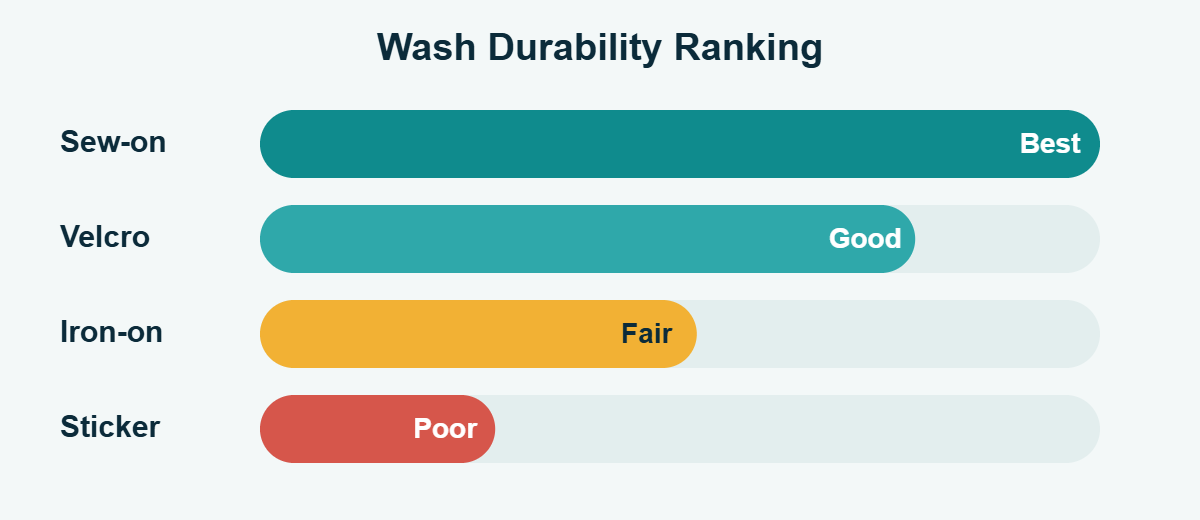
Sew-on lasts the longest. Stitches don’t soften with heat and water the way adhesive can.
| Backing | Washing Performance |
|---|---|
| Sew-on | Best; survives years of industrial washing (Patch & Bagel) |
| Velcro | Good; remove the patch before washing to protect it and the hook side |
| Iron-on | Fair; adhesive can soften at the edges over time. Stitching the border helps |
| Sticker/adhesive | Poor; meant for temporary use and can lift off fabric within a few washes |
To make any patch last longer, wash the garment inside out on a gentle cycle and avoid high dryer heat.
Order Custom Patches with the Right Backing
At Infinite Digitizing, we make custom embroidered patches with the backing that suits where they’ll be worn. Tell us the garment and how it will be used, and we’ll recommend the backing. For design ideas, see our guide to custom embroidery patches, and for what to check in a quote, read ordering custom patches online.
Ready to order?
Request a quote and tell us what the patches will go on.
FAQs
1. What is the difference between iron-on, sew-on, and Velcro patches?
The way they are attached is the main difference. Iron-on patches use a heat-activated adhesive, sew-on patches are stitched by hand or machine, and Velcro patches use hooks and loops so they can be removed.
2. How do you apply an iron-on patch without damaging the fabric?
Check the care label first. Cover the patch with a thin cloth and press firmly for 20 to 30 seconds without steam. Press again from the inside, let it cool, and re-press any edges that lift.
3. Which patch backing lasts longest after washing?
Sew-on lasts longest because it is stitched and permanently attached to the fabric. It does not depend on glue that can soften with heat and water.
4. Which fabrics should not be used with iron-on patches?
Avoid nylon, leather, coated fabrics, and waterproof shells. Heat can damage them, and the adhesive may not bond well.
5. Are Velcro patches good for uniforms and tactical gear?
Yes, for tactical gear, bags, and ID or morale patches, because the patch can be removed and swapped. For uniforms with a dress code, check the rules first, since some require sewn-on patches.