Cotton twill and canvas are the best materials suitable for machine embroidery because of their stability. However, for achieving professionally smooth results on any fabric, from hard-wearing denim to stretchy knit fabrics, it is necessary to carefully select the appropriate stabilizer. The success of all embroidery projects will depend on the combined effort of using professional embroidery digitizing that can adapt to your fabric characteristics.
What Makes a Fabric Good for Machine Embroidery?
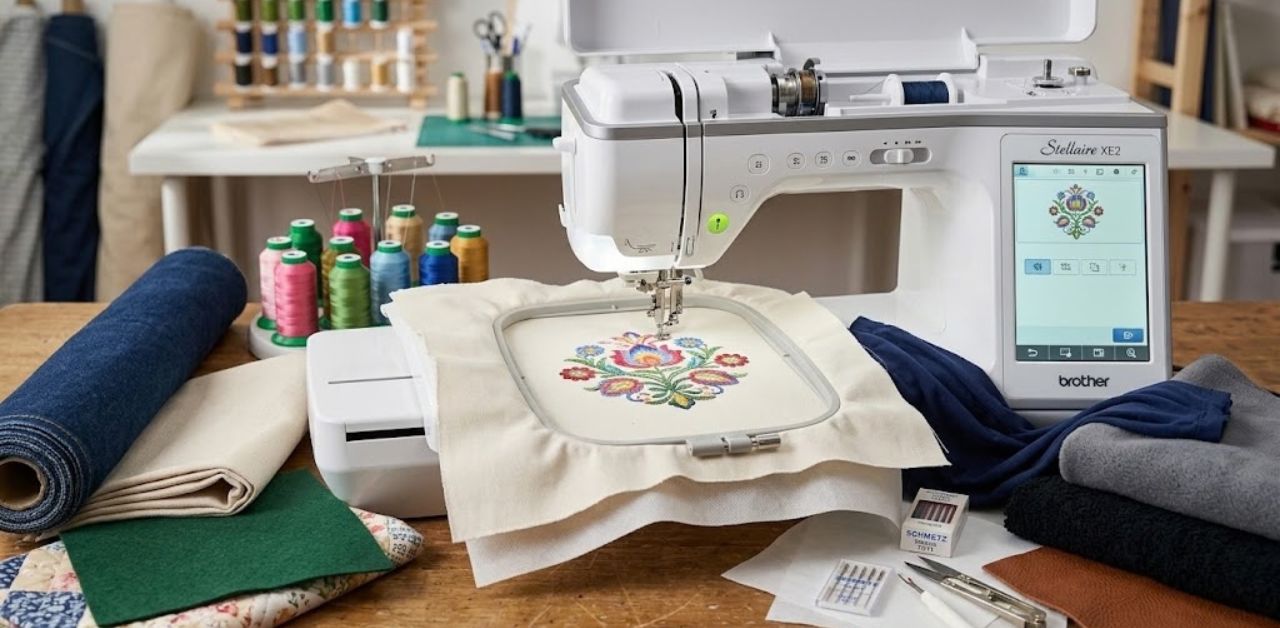
During the process of preparing your project, there are basically three production classes of materials that can be used for embroidery: non-woven fabrics such as felt, woven fabrics including cotton, linen, silk, and polyester, and knit fabric.
- Stability is King: The more stable a fabric is, the easier it is to create clean-looking lettering and fills.
- The Weave Factor: Plain weaves act differently from twill weave structures, such as denim, and twist levels affect stitch penetration.
- Thickness and Weight: Natural fabrics have an inherent density which allows for a certain stitch density.
Quick Comparison: Best Fabrics at a Glance
| S. No. | Fabric | Stability | Recommended Stabilizer | Density Note | Difficulty |
|---|---|---|---|---|---|
| 1 | Cotton twill/canvas | High | Tearaway or light cutaway | Standard | Easy |
| 2 | Quilting cotton | Medium | Cutaway + spray starch | Standard | Easy–Medium |
| 3 | Felt | Very high | Optional | Standard | Easy |
| 4 | Polo/pique knit | Low–Medium | Cutaway + topping | Reduce slightly | Medium |
| 5 | T-shirt jersey | Low | Cutaway (fusible) | Lighter fills | Hard |
| 6 | Fleece/terry | Low, high pile | Cutaway + water-soluble topping | Adjust for pile | Hard |
| 7 | Fleece/terry | Low, high pile | Cutaway + water-soluble topping | Adjust for pile | Hard |
| 8 | Leather/vinyl | High, but perforates | Tearaway or none | Lower density | Medium |
Note: Always run test sew-outs to confirm density limits with your specific machine setup.
Woven Fabrics: Best for Beginners and Clean Results
If you are just getting started or you want guaranteed results, then tightly woven fabrics will be your ideal choice.
- Top Contenders: Cotton twill, canvas, and heavy denim are some of your top options, providing a stable fabric base that doesn’t move.
- Handling Looser Weaves: With looser fabrics such as quilting cotton and linen, there is a tendency to distort due to the movement of the fabric while stitching. Before placing in the hoop, lightly mist with spray starch or place light fusible interfacing and press.
- The Golden Rule: Do not stitch plain weave fabrics bare, or else you’re in for puckered edges near the embroidery design.
Verdict: Your best choice of all for neat lettering and satin column stitching is tightly woven cotton twill or canvas. For a broader overview of textile compatibility, explore our guide on types of machine embroidery.
Knits and Stretch Fabrics: Best With the Right Setup
Knitting is extremely difficult to do due to the flexibility of the knitting itself. When there is a pull between the needle and thread and the loops of yarn, the material becomes distorted.
- Stabilization is Mandatory: Always use cutaway stabilizer for stretch materials, and always make sure that the hooping technique does not overstretch the fabric.
- Managing Density: Heavy fill stitches on stretchy garments cause tunneling and fabric pulling. Reduce your stitch density and opt for lighter underlay patterns.
- Tailored Files: Utilizing custom embroidery digitizing makes all the difference here. Files built specifically for stretch garments feature adjusted pull compensation and lighter underlays to accommodate fabric movement naturally.
Verdict: Best reserved for experienced stitchers or projects utilizing files specifically optimized for stretch garments through professional embroidery digitizing services.
Nonwoven, Leather and Vinyl: Special Cases
Specific materials need specific handling since they do not act like conventional woven or knit fabrics.
- Felt: So stable and forgiving, felt is best for patches and badges. However, felt does not drape well, and less expensive synthetics pill when sewn.
- Leather and Vinyl: Since puncture holes are permanent, you cannot fix a mistake. Keep stitch density low and avoid heavy center underlays that perforate the material like a postage stamp.
- Backings: Using vinyl backed with a woven scrim helps resist the cutting action of dense satin borders.
Verdict: Ideal for patches, structural accessories, and unique applique bases when paired with an experienced embroidery digitizing service.
Why Fabric Should Change Your Digitizing Settings
One of the most common misunderstandings is that the same embroidery file will work on any garment without any difference. Actually, embroidery digitizing requires total adaptation to your fabric.
When digitizing for embroidery of stretchy knitwear or fleece, you will need careful manipulation of the density of stitches, the angle of underlay, and compensation parameters. Thus, a felt patch allows for dense stitching, whereas a light jersey should have open fills with little to no underlay. To understand how stitches contract and pull textiles inward, review our guide on push and pull compensation.
Ultimately, fabric and file planning go hand in hand: even the highest-quality fabric will pucker if paired with an unoptimized design file.
Stabilizer: The Partner Every Fabric Needs
Your backing fabric forms the temporary skeleton of your design. Picking the appropriate backing material is as important as picking your fabric.
- Cutaway: Very important for knits, stretchy fabric, and complicated designs, as it remains behind the stitching permanently.
- Tearaway: Ideal when working with rigid and stable wovens because the excess backing can be easily peeled away after sewing.
- Water-soluble: It can be used as toppings on fabrics such as fleece and towels to avoid stitches sinking; or as a base when doing free-standing lace.
When digitizing embroidery, the file’s density and underlay will always assume your backing choice. For a deeper breakdown, read our guide on how to use different stabilizers for flawless stitching.
Get the Right Setup for Your Fabric
A professional digitizer considers the unique fabric, design of the garment, and stabilizer that is needed right from the beginning of each project. When you upload artwork, let your digitizer know your exact type of fabric and its final use. Providing comprehensive details such as garment composition, item size, and colorways ensures your file stitches out smoothly without unexpected distortions.
Get Your Design Digitized for Your FabricKey Takeaways
Machine embroidery skills are based on choosing the right type of fabric along with suitable stabilizers and well-optimized stitch designs. Understanding how to work with stable materials and setting up the correct density and backing will provide excellent results for anything from a strong canvas to a soft knit.
Transform your vision into flawless stitch-outs with Infinite Digitizing’s custom embroidery digitizing tailored precisely to your fabric.
FAQs
1. What is the best fabric for machine embroidery?
A: Tightly woven cotton twill and canvas are the best overall fabrics due to their high stability.
2. Can you embroider on stretchy knit fabrics?
A: Yes, but they require a sturdy cutaway backing and specialized, lower-density digitizing files to prevent distortion.
3. Which stabilizer works for lightweight fabrics?
A: Light cutaway or tearaway backings work well, often paired with spray starch for unstable wovens.
4. Why does fabric type change the digitizing file?
A: Different textures and stretch levels require adjusted stitch densities, underlays, and pull compensation to avoid puckering.
5. Which fabrics should beginners avoid?
A: Beginners should avoid stretchy knits, high-pile fleece, and slippery wovens until they gain experience.