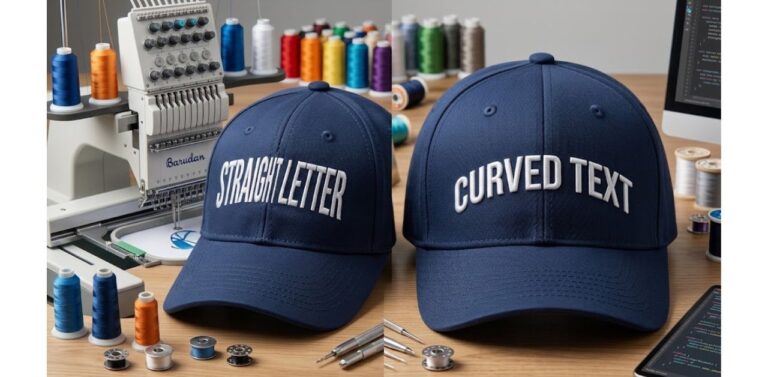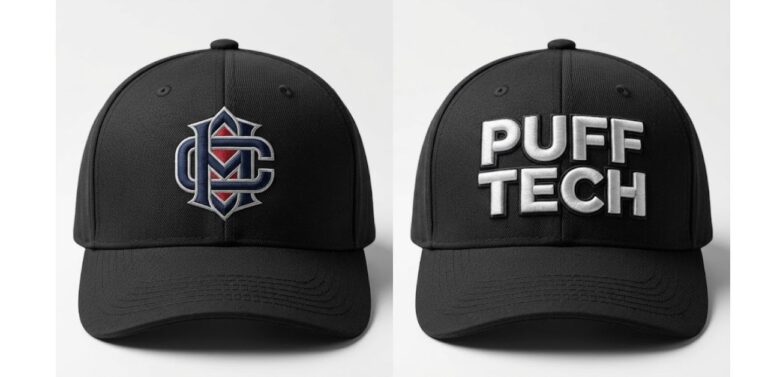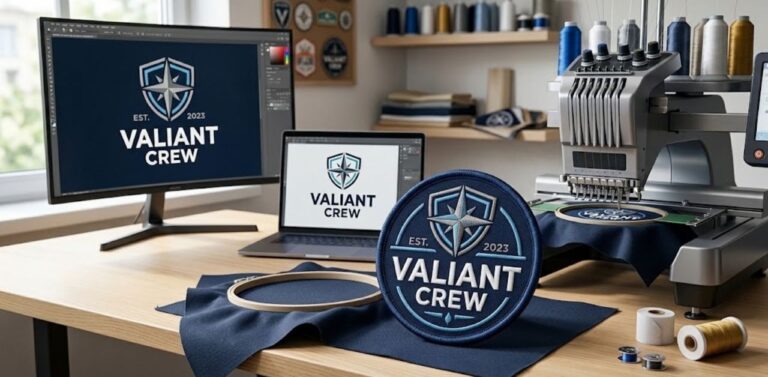
If your logo looks flat or puffy, it will depend on the design, material, and professional 3D puff digitizing. For caps, jackets, and polos, the embroidery stitch technique will play a huge role. Two screen-identical logos can become totally different once they are stitched. Some designs will demand a certain level of simplicity in their stitching process. Knowing how these work is the best way to avoid mistakes in production.
What Is Flat Embroidery?
Flat Embroidery is the classic style used on most corporate polos and uniform patches. The thread lies flat against the fabric without any foam in between. Since there are no obstacles or height changes involved, it is one of the most flexible styles in machine embroidery.
- Key Strengths: Handles fine lines, complex lettering, color transitions, and details.
- Garment Versatility: Applies to any garment or fabric imaginable, whether that be thin cotton t-shirts and polo shirts, heavier coats, bags, and even unstructured “dad” caps.
- The Catch: It offers less visual depth and punchy physical impact from a distance compared to raised alternatives.
To learn more about the types of techniques, check out our guide on What Are the Types of Machine Embroidery. When expert digitizing for embroidery is applied, even complex and multicolored designs will lay perfectly flat on the fabric without making it pucker.
What Is 3D Puff Embroidery?
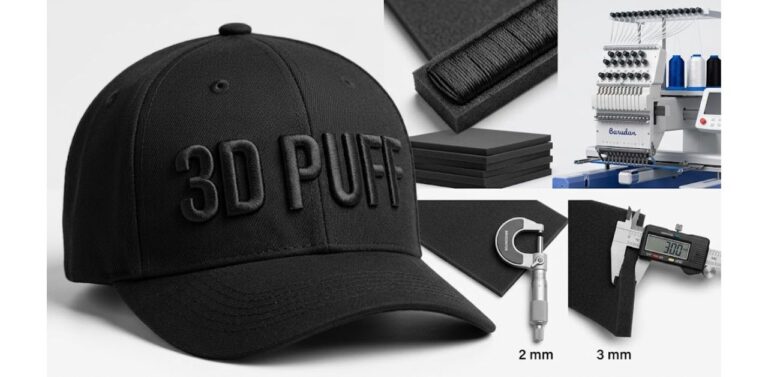
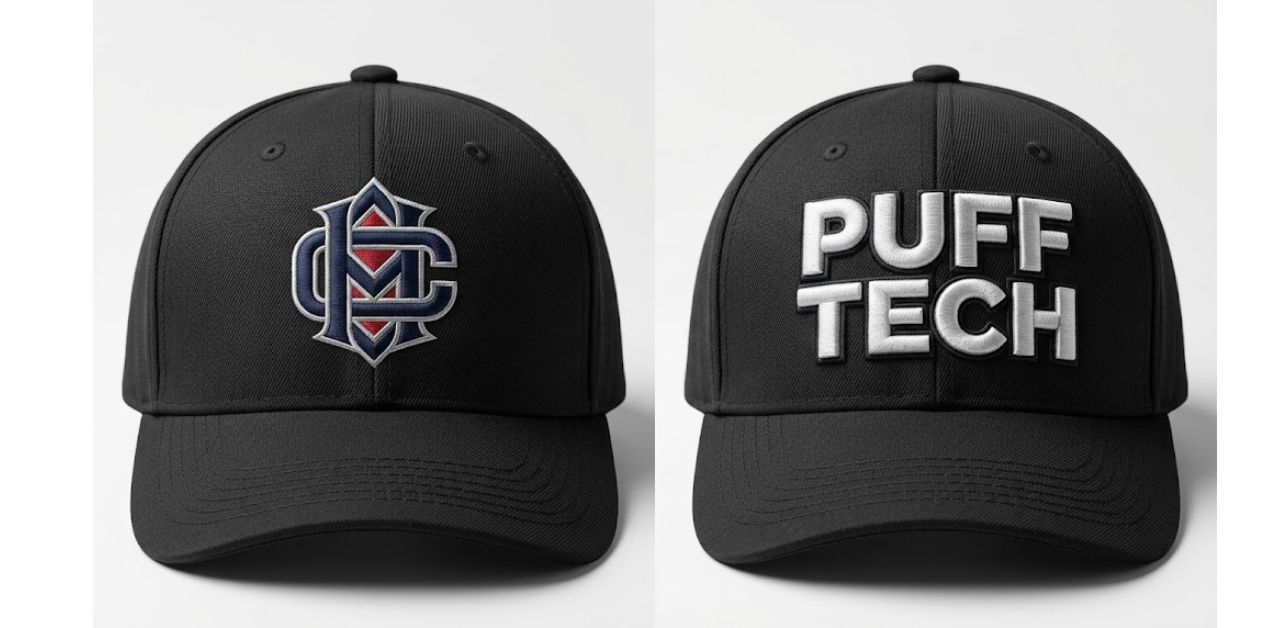
If you would like your logo to stand out by popping out from the fabric surface, then 3D puff embroidery is for you. An EVA foam film is first laid onto the garment before sewing. Then the machine embroiders over the foam layer, and due to the needle perforations, the excess foam layer can be easily removed, leaving a sculpted, three-dimensional element.
- How it works: The foam effect will only work when the proper stitching direction and density are set with the use of 3d puff digitizing.
- Visual Appeal: Gives a very elegant and embossed feel to the design, which also reflects light.
- Design Sweet Spot: Best suited for bold designs and thick block lettering.
- Limitations: Fine text and skinny details will slice through the foam or get lost entirely, filling in into an unreadable mess. Minimum letter height matters significantly here; always confirm exact clearance figures with your production team before printing.
Learn more about why these styles are trending in The Growing Popularity of 3D Puff Embroidery. Professional 3d puff embroidery digitizing guarantees that the foam is completely enclosed by the thread for superior quality.
Flat Embroidery vs 3D Puff: Side-by-Side Comparison
While planning for manufacturing costs, customers always ponder the question of differences in prices.
| Factor | Flat Embroidery | 3D Puff Embroidery |
|---|---|---|
| Look | Smooth and detailed | Raised, bold, dimensional |
| Best Design Type | Small text, fine details, gradients | Thick lettering, simple shapes |
| Best Garments | Polos, jackets, bags, T-shirts | Structured caps, beanies, heavy fabrics |
| Digitizing Complexity | Standard | Higher; requires foam-specific setup |
| Production Cost | Generally lower | Generally higher due to foam and extra steps |
| Visual Impact | Subtle and classic | Strong and eye-catching |
Is 3D puff expensive compared to regular flat embroidery? Yes, it is usually costlier due to the foam used, the additional setup process, and lower machine speed. If you are planning an extensive apparel line, utilizing reliable embroidery digitizing services helps clarify pricing structures and production efficiency.
How Digitizing Differs for Each Style
Writing a clean stitch file requires completely different strategies depending on whether foam is involved. Expert custom embroidery digitizing ensures technical changes such as the following:
- Flat setup: The emphasis is on fine-tuning the stitch, density ratio, pull compensation, and solid underlays to prevent puckering of soft materials.
- Puff setup: The requirement includes unique perimeter tie-down stitches that help cut through foam easily, heavy cover densities that help hide foam beneath, and no sharp edges.
- File integrity: A poorly prepared file will result in ragged foam edges or exposed backing, regardless of how advanced your embroidery machine is.
If you are working on a dimensional project, our professional 3d puff digitizing services can help ensure clean production runs. For a step-by-step breakdown of general file preparation, read our guide on How to Digitize a Logo for Embroidery.
Which Garments Suit Each Style?
Selecting the correct canvas ensures no distortion of fabric and no wastage of inventory:
- Ideal for 3D Puff: Baseball caps, snapback caps, heavy beanies, hoodies, and thick jackets. Choosing the top 3d puff digitizing services prevents ragged edges.
- Ideal for Flat Embroidery: Dress shirts, thin polo shirts, athletic tees, soft cotton bags, and patches.
- Fabric Warnings: Do not use puff designs on thinner and stretchier fabric, as it can create problems due to pulling of foam by the fabric. Use only flat designs when using multiple colors and thin outlines.
Can You Combine Flat and 3D Puff?
It is not always necessary to choose just one style. Many modern clothing brand logos employ both styles at once to enjoy the benefits of both.
- The hybrid approach: Combine 3D Puff embroidery to create the bold brand name, while using Flat stitching to highlight sub-lines, underline, or other design elements.
- Technical execution: The digitizer should be very thorough in planning the stitch order so that the foam is covered completely by the thick top thread stitches, whereas flat stitches don’t crush the puffed areas.
Pro tip: Always provide your embroiderers with clean vector graphics and specify the exact type of garment you have.
How to Choose: Quick Decision Checklist
Before finalizing your production files, run through this quick decision framework:
- Garment Type: Is it a structured cap or a lightweight polo?
- Text Size & Detail: Are your letters under 6mm tall? If yes, keep it flat.
- Aesthetic Goal: Do you want a light texture or a strong look?
- Budget and Scale: Is your budget large, and is it intended for store purposes where speed counts?
If you pick puff embroidery technique, ensure that you are working in a team that is proficient in 3D puff digitization.
Final Takeaways
Flat embroidery vs. 3D puff depends on how intricate the design will be, what kind of garments the design will be put on, and how much money you have to spend. Flat embroidery is best for intricate designs on light materials, whereas 3D puff embroidery is excellent for creating raised designs for hats. Considering these facts seriously helps one to get excellent dress looks.
Bring your apparel to life with Infinite Digitizing, where expert craftsmanship and precision guarantee flawless flat and 3D puff embroidery.
FAQs
1. What is the difference between flat embroidery and 3D puff?
A: Flat embroidery is stitched directly onto the fabric surface, whereas 3D puff places a foam layer underneath the thread to create a raised, dimensional look.
2. Which designs work better as flat embroidery?
A: Small text, fine details, intricate line work, color gradients, and multi-color artwork excel with flat stitching.
3. Is 3D puff more expensive than flat embroidery?
A: Yes, it is usually more expensive due to specialized foam materials, extra setup steps, and slower machine production speeds.
4. Can you combine flat and 3D puff in one design?
A: Yes, by using puff for bold foreground elements and flat stitching for fine details, small lettering, or secondary text.
5. Which garments are best suited for 3D puff?
A: Structured caps are the top choice, followed by beanies, hoodies, and heavy jackets made from thick, stable fabrics.