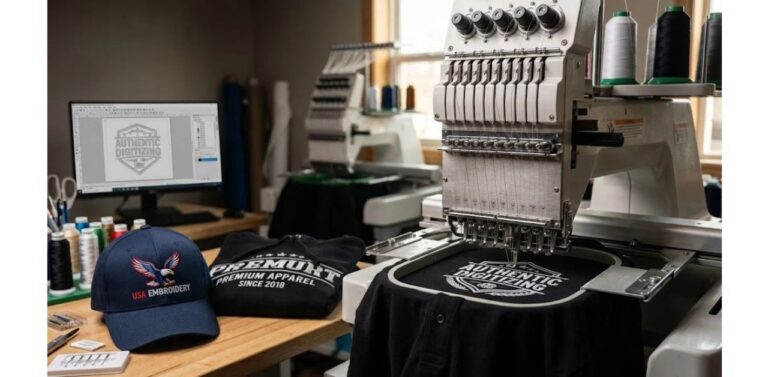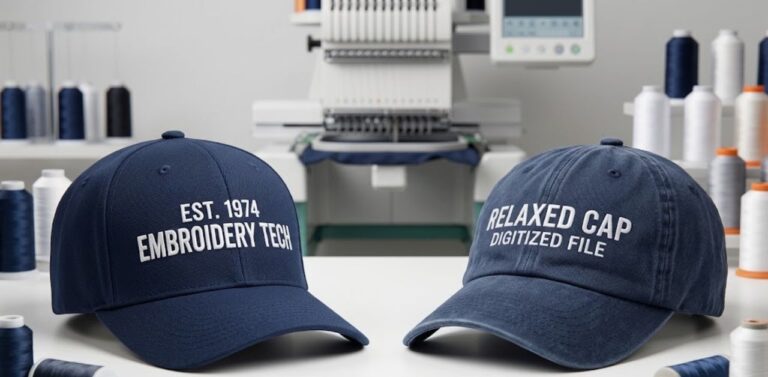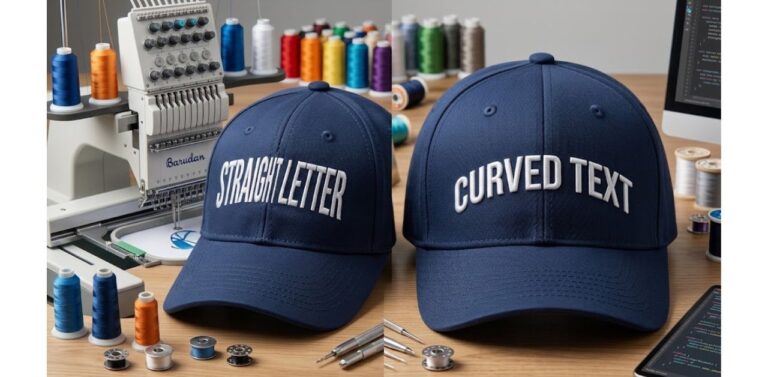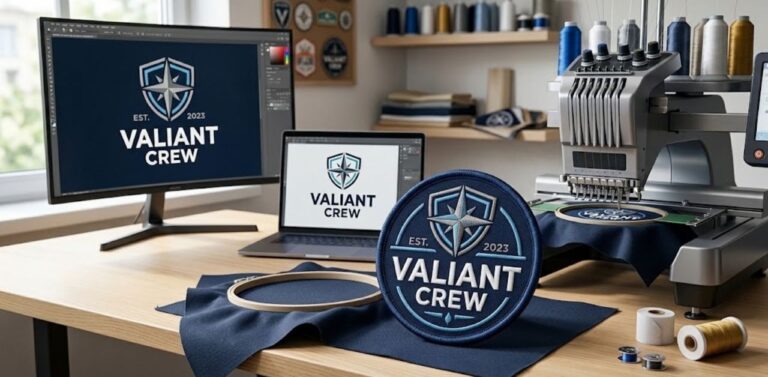

Embroidery is one of the oldest ways to add personality and branding to fabric, but the final result depends on far more than a good design. Before a single stitch is sewn, the artwork has to go through embroidery digitizing, the process that turns a flat image into instructions a sewing machine can actually follow. Skip this step, or hand it to someone inexperienced, and even a great logo can come out puckered, gappy, or unrecognizable on fabric.
This is why professional digitizing isn’t a “nice to have” it’s the foundation of every clean, durable embroidery design.
What Does Digitizing Actually Involve?
Digitizing is the process of converting artwork or a logo into a stitch file that an embroidery machine can read. A digitizer maps out:
- Stitch paths – the exact route the needle travels across the design
- Stitch types – satin, fill, or running stitch, depending on the shape and size of each element
- Stitch density – how tightly the threads are packed, which affects both texture and durability
- Color sequencing – the order colors are sewn in, to minimize thread changes and keep production efficient
Getting these details right takes both technical skill and a trained eye for how a design will behave once it’s actually on fabric, not just how it looks on a screen.
Why Professional Digitizing Makes a Real Difference
A rushed or amateur digitizing job usually shows up as thread breaks, distorted text, or a design that shifts and puckers after a few washes. Professional digitizing avoids these problems in a few specific ways:
- Precision placement – every stitch is positioned deliberately, so fine details like small text or thin lines stay legible instead of blurring together.
- Correct density and direction – stitch density is adjusted based on the fabric type, so the design lies flat instead of stretching or bunching.
- Machine efficiency – a well-built file runs smoothly with fewer thread breaks and trims, which keeps production fast and consistent.
- Quality control – a second set of eyes (ideally a senior digitizer) reviews the file before it ever reaches a sewing machine, catching issues before they become wasted fabric.
Where Digitizing Is Used
Digitizing isn’t limited to company logos. It shows up across a wide range of embroidery work, including:
- Corporate branding, uniforms, caps, and promotional apparel
- Sports apparel, team crests, player numbers, and sponsor logos
- Fashion, decorative or intricate embroidery on garments
- Personalized gifts, monograms, names, and custom designs on accessories
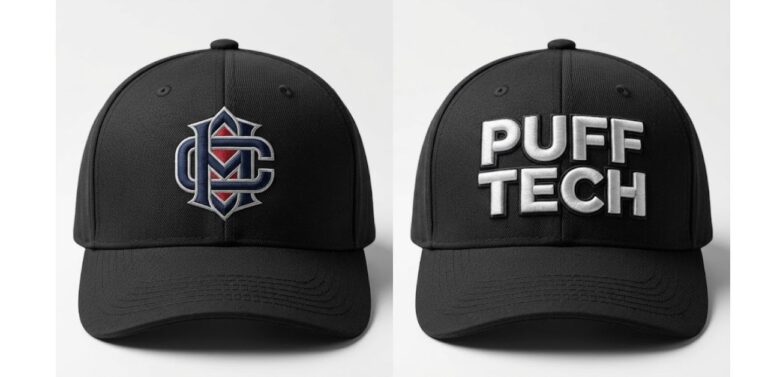
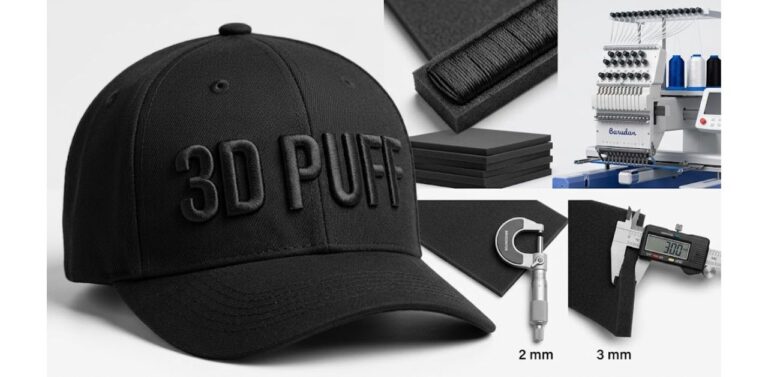
Some of these applications need more specialized techniques. Raised, textured logos on caps, for example, rely on 3D puff digitizing rather than a standard flat stitch file, while artwork that starts as a low-resolution image usually needs to be cleaned up as vector art first, so the digitizer has a sharp, scalable file to work from.
What to Look for in a Digitizing Service
If you’re deciding who should handle your files, a few things separate a reliable service from a risky one:
- Experience across design types, simple text logos and complex, multi-color artwork require different approaches.
- A real review process, files should be checked before delivery, not sent straight from the digitizer to you.
- Willingness to revise, stitch files rarely need to be perfect on the first try, and a good service won’t charge extra to fix it.
- Fast, realistic turnaround, quality shouldn’t mean waiting days for a left-chest logo.
Final Thoughts
Good embroidery starts long before the needle touches fabric. Professional digitizing is what turns a design into a file that actually performs, clean lines, correct density, and a result that holds up wash after wash. At Infinite Digitizing, our team works through custom embroidery projects of every complexity, with every file reviewed by a senior digitizer before delivery.
If you have artwork you’d like digitized, you can get a free quote and see the turnaround and pricing before committing to anything.
1. What is digitizing in embroidery?
A: Digitizing is the process of converting artwork or a logo into a stitch file that an embroidery machine can read, including stitch paths, stitch types, density, and color sequence.
2. Why can’t I just use any digitizer for my design?
A: Complex designs, fine text, gradients, or multi-color logos need a digitizer experienced with that level of detail. An inexperienced digitizer may produce a file that looks fine on screen but sews poorly on fabric.
3. Does digitizing affect how long embroidery lasts?
A: Yes. Correct stitch density and underlay directly affect how well a design holds up to washing and everyday wear. Poor digitizing often leads to fraying or distortion over time.
4. How long does professional digitizing take?
A: Turnaround depends on design complexity, but most standard logos can be digitized within a few hours when handled by an experienced team.