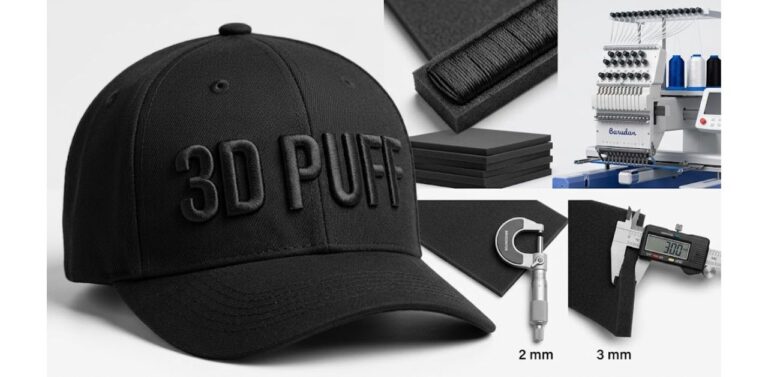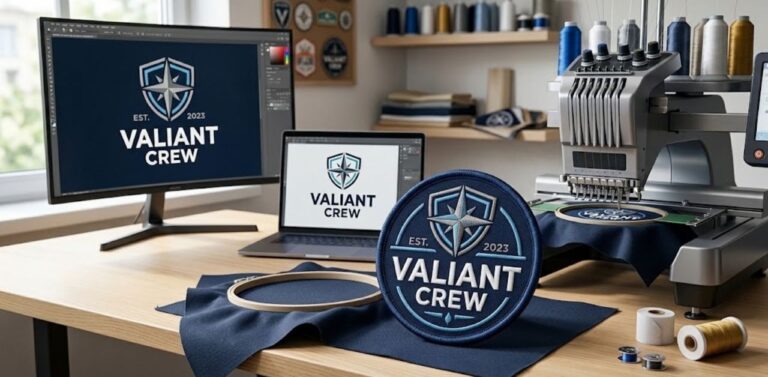
It’s also the starting point for other custom products. For example, custom patches often need a clean vector outline before the design can be translated into stitching or fabric layers.
What Is Vector Art?
Vector art is built from mathematical formulas rather than pixels. Unlike raster images, which start to blur or pixelate the moment they’re scaled up, vector files stay sharp at any size. That’s exactly why they’re the standard format for logos, illustrations, and custom designs that need to work across multiple formats.
A business logo built in vector format can move from a small embroidered cap design to a full-size billboard print without losing a single clean edge.
Why Vector Art Matters for Custom Design Work
A few core advantages explain why vector art has become the default for custom design:
- Scalability – designs resize without any loss in quality, so the same file works whether it’s tiny or huge.
- Editability – individual elements in a vector file can be adjusted without redrawing the whole design.
- Compatibility – vector files translate cleanly into embroidery machine files and print-ready formats alike.
- Precision – sharp edges and fine details are preserved exactly as designed, with no blur or distortion.
Where Vector Art Is Used
Vector art shows up across a wide range of industries and formats, including:
- Branding – logos, business cards, and signage all rely on the clarity vector art provides.
- Apparel – t-shirt designs and custom embroidery patterns typically start life as a clean vector file before any stitching begins.
- Product packaging – crisp, scalable graphics keep packaging looking sharp at any print size.
- Marketing materials – banners, flyers, and posters depend on vector art to stay polished at large formats.
It’s also the starting point for other custom products, custom patches, for example, need a clean vector outline before the design can be translated into stitching or fabric layers.
Why Professional Vector Conversion Matters
Turning a rough logo or low-resolution image into accurate vector art takes real skill. A poorly converted file often shows up as jagged edges, mismatched colors, or missing details, problems that then carry over into whatever the vector file is used for next, whether that’s embroidery or print.
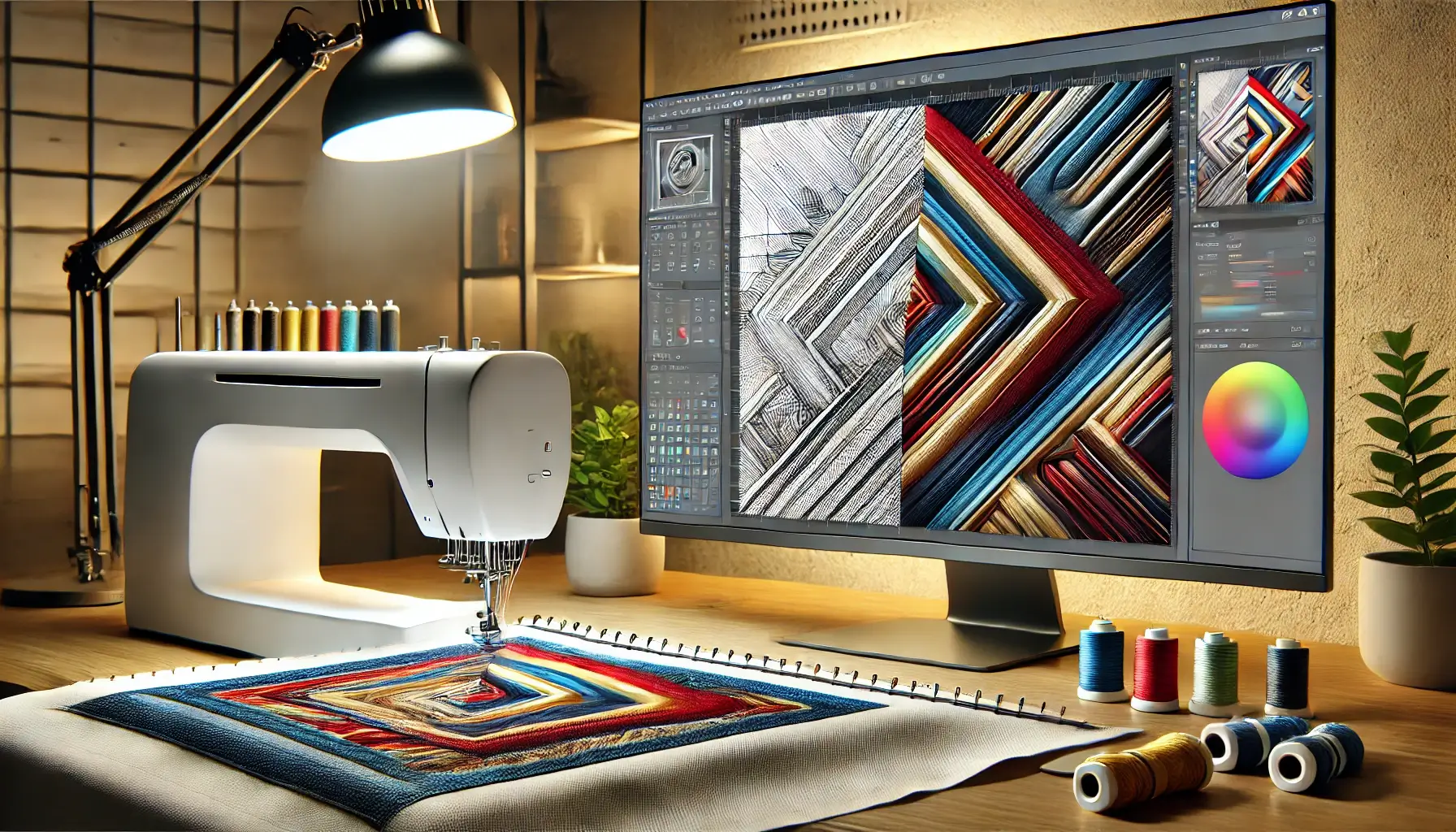
This matters even more once a design moves toward production. If a logo is headed for embroidery, for instance, a clean vector file is what allows the embroidery digitizing process to start from an accurate outline instead of guessing at blurry edges.
Final Thoughts
Vector art is the foundation that everything else in custom design builds on. Its scalability, precision, and flexibility are what let a single logo work just as well on a cap as it does on a storefront sign. If you’re planning a custom project and need reliable embroidery digitizing services, starting with a clean, professionally converted vector file makes every step after it stitching, printing, or branding, turn out sharper and more consistent.
FAQs
1. What’s the difference between vector art and a regular image?
A: A regular (raster) image is made of pixels and loses clarity when enlarged. Vector art is built from mathematical paths, so it stays sharp at any size.
2. Why does embroidery need vector art?
A: A clean vector file gives a digitizer accurate outlines and color separations to work from, which leads to a cleaner, more precise stitch file.
3. Can any logo be converted to vector art?
A: Most can, though very low-resolution or heavily detailed images may need some simplification to convert cleanly without losing important details.
4. What file formats does vector art come in?
A: Common formats include AI, EPS, PDF, and SVG, all of which can be resized without losing quality.
5. Is vector art only useful for embroidery and printing?
A: No, it’s used anywhere a design needs to scale cleanly, including signage, packaging, apparel, and digital branding.