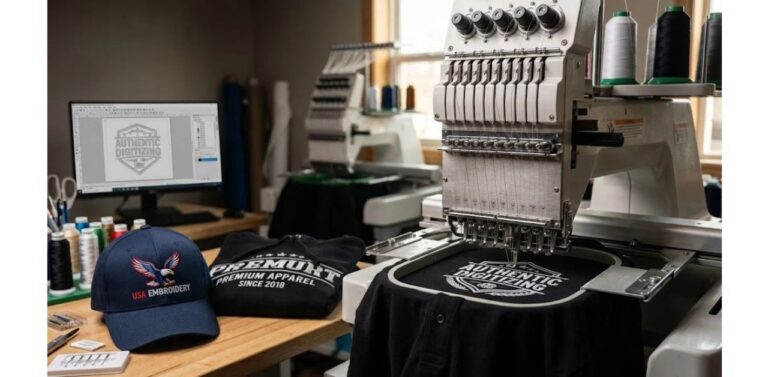
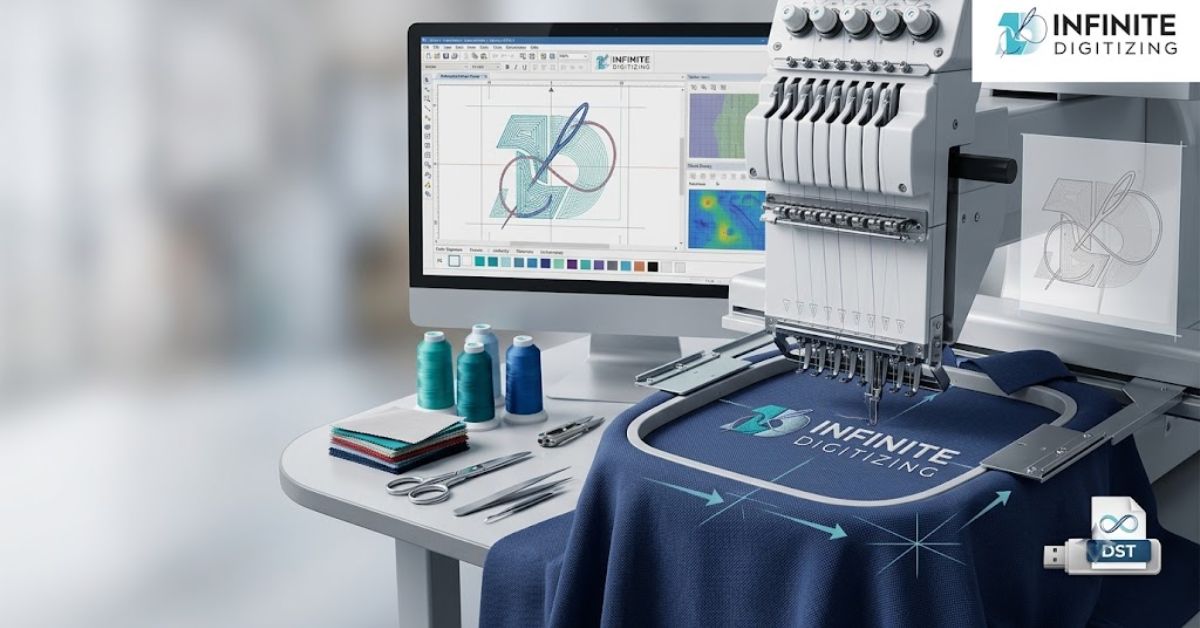
You can get perfect results by learning the technical details of your designs. Embroidery digitizing requires accurate stitch counts, appropriate backing, and the correct file formats. Working with a skilled team such as Infinite Digitizing because this will guarantee clarity in logos and prevent issues such as wrinkles on the fabric or even broken threads.
Why Accuracy Matters in Embroidery Digitizing
Many business owners are surprised when a beautiful logo design stitches out poorly, showing puckering or gaps. The reality is that your digital file is the structural blueprint of your brand. If the underlying logic is flawed, no amount of expensive thread can save the design. When it comes to producing professional-quality work, Infinite Digitizing offers the professional precision you require.
- Avoid Common Defects: Professional review prevents puckering, thread breaks, and design distortion.
- Production Reliability: All files go through stitching logic verification before being used by your machines.
- Industry Demand: With the focus on quality goods, the use of professionals has become mandatory.
For more information about the professional process, see our guide What Is Embroidery Digitizing?
Quick Checklist: What Every Digitized File Needs
When digitizing embroidery, consistency is everything. Use this table to audit your files or communicate with your embroidery digitizing service provider.
| Element | What to Check | Why It Matters |
|---|---|---|
| File format | DST, PES, EXP, or machine-native | Ensures machine compatibility |
| Stitch density | Matched to fabric weight | Prevents puckering or gaps |
| Underlay | Present beneath fill/satin areas | Stabilizes the base layer |
| Stitch direction | Follows the design shape | Avoids distortion and thread pull |
| Text size | Minimum readable height | Keeps small letters legible |
| Color sequence | Logical thread change order | Reduces production time |
Need professional help with these requirements? Learn how to choose the right partner at How to Choose the Best Embroidery Digitizing Services for Your Needs.
Tip 1: Start With High-Resolution, Simplified Artwork
Your work is only as good as the file that is provided. Low-resolution images or complicated vectors are some of the most typical reasons behind poor-quality work.
- Simplify Complex Designs: Remove any small details or colors before starting.
- Clean Source Art: Use high-resolution files to provide clear boundaries for your digitizing services for embroidery.
- Text Clarity: Ensure tiny text is simplified to guarantee it translates well to the thread.
- Foundation: Clean source art is the bedrock of every accurate digitized file.
Tip 2: Pick the Right Stitch Type for Each Element
Embroidery digitizers know that different design elements require specific techniques. The right mix creates dimension rather than a flat, uninspired look.
- Satin Stitches: Best for clean borders, thin shapes, and professional text.
- Fill Stitches: Necessary for providing solid, durable coverage to larger areas.
- Running Stitches: Ideal for fine outlines and intricate detail lines.
- Intentional Design: The correct stitch mix separates a hobbyist design from a professional one.
Tip 3: Get Stitch Density and Underlay Right
Balanced density is critical in digitizing for embroidery. If you get this wrong, your design will either pucker or show unsightly gaps.
- Avoid Puckering: Too many stitches per area will stress the fabric.
- Prevent Gaps: Too few stitches will fail to cover the fabric properly.
- Stabilization: Proper underlay is key to keeping the fabric stretched.
- Fabric Sensitivity: The density needs to be set up accordingly depending on specific materials like knit or denim.
Tip 4: Match Digitizing to the Fabric and Placement
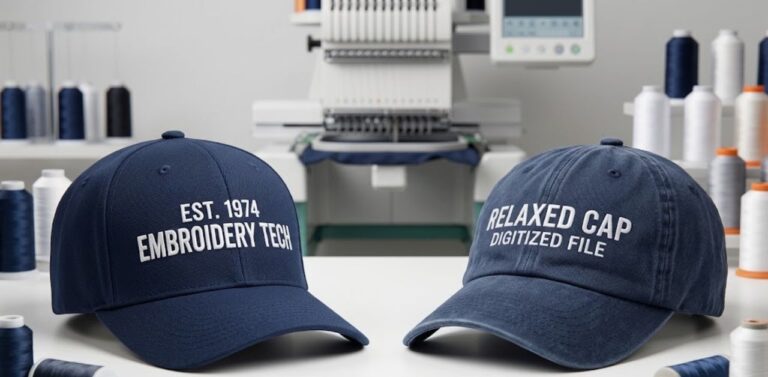
There is no “one-size-fits-all” approach to digitizing embroidery. An embroidered logo for a stiff cap is completely different from one for a soft polo shirt.
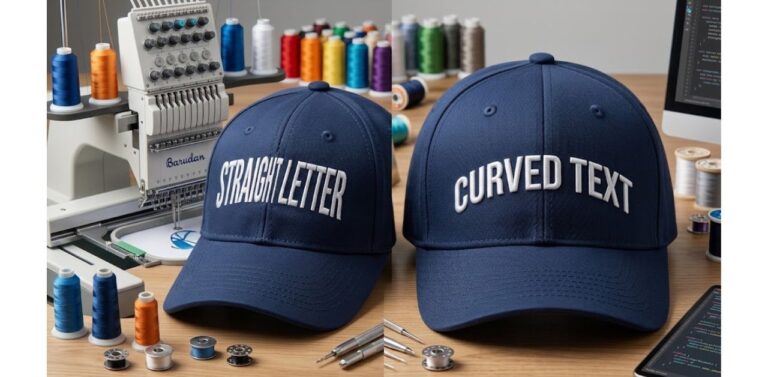
- Garment-Specific Logic: Caps need adjusted stitch paths to prevent warping on curves.
- Fabric Tension: Stretchy fabrics require extra, built-in stabilization techniques.
- Planning Ahead: Determine your stabilizer choice alongside your digitizing setup.
- Customization: The same logo should be digitized differently based on its intended placement.
Tip 5: Set Correct Stitch Direction and Sequencing
Poorly planned sequencing is a silent profit killer. It forces the machine to perform unnecessary trims, adding minutes to every single piece you run.
- Light Reflection: Stitch direction changes how light hits the design, improving visual appeal.
- Minimize Jumps: Smart sequencing keeps the machine runtime efficient.
- Intentional Quality: A well-planned sequence looks purposeful rather than machine-guessed.
- Efficiency: Utilizing online embroidery digitizing expertise saves time on every production batch.
Tip 6: Always Run a Test Stitch-Out
Never send a new file directly to bulk production. A test stitch-out is your only real safety net against costly errors.
- Catch Hidden Issues: Reveals density, sizing, and color placement problems early.
- Real-World Validation: Screen previews cannot replicate how the thread interacts with your specific fabric.
- Cost Protection: Skipping this is the fastest way to ruin a batch of garments.
- Expert Advice: While getting your embroidery digitizing online, make sure you get a sample digitally tested.
Tip 7: Work With an Experienced Digitizing Service
Trained professionals at Infinite Digitizing understand the nuances of fabric and machine physics. Automated software simply cannot match manual, human-led quality control.
- Manual Review: We analyze every piece of artwork before conversion begins.
- Reliability: Choosing experienced partners offers revisions, flexible formats, and fast turnaround.
- Long-Term Savings: Choosing the best embroidery digitizing service initially prevents the cost of fixing bad files later.
DIY Digitizing vs Professional Experts
Many people consider doing it themselves with automated tools. Here is why choosing professional digitizing services for embroidery often makes more sense for serious businesses.
| Feature | DIY / Auto-Digitizing | Infinite Digitizing (Professional) |
|---|---|---|
| Stitch accuracy | Inconsistent, template-based | Manually reviewed for each design |
| Fabric adjustment | Limited or none | Adjusted per fabric/placement |
| Turnaround | Immediate, but needs rework | Fast, with revisions included |
| Best for | Simple, one-off projects | Logos, uniforms, bulk production |
When it comes to quality, you must understand Push-Pull Compensation. This is what makes the difference between a design that fits and a design that stretches.
Conclusion
Accuracy in embroidery starts with good digitizing. By using good quality artwork, the right amount of stitches, and proper order of sewing, you make sure each piece of clothing looks great. Infinite Digitizing can take care of your complicated files, helping you save time and money. Elevate your brand with the best embroidery digitizing services available today.
Experience superior embroidery results with Infinite Digitizing, your trusted partner for precise, professional, and reliable designs.
FAQs
1. What is embroidery digitizing?
A: It is the process of converting artwork into a file that embroidery machines can read and stitch.
2. How can embroidery digitizing be made more accurate?
A: By using high-resolution source files, proper underlay, and ensuring correct stitch density for the specific fabric.
3. What factors affect embroidery quality?
A: Stitch density, fabric type, machine tension, proper stabilization, and the skill of the digitizer.
4. Why is professional embroidery digitizing important?
A: It prevents costly production errors like puckering, gaps, and thread breakage, ensuring a crisp, professional final product.