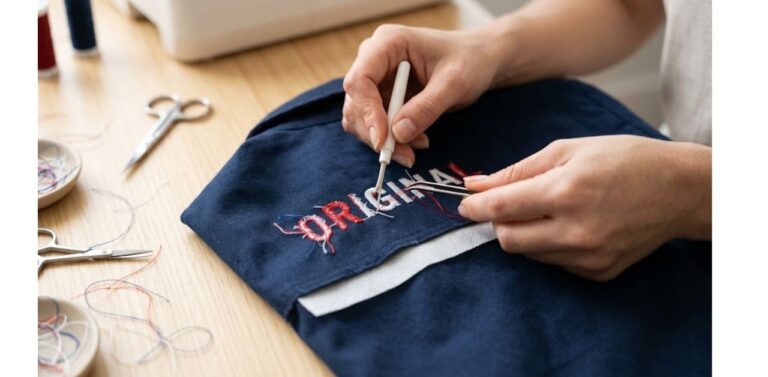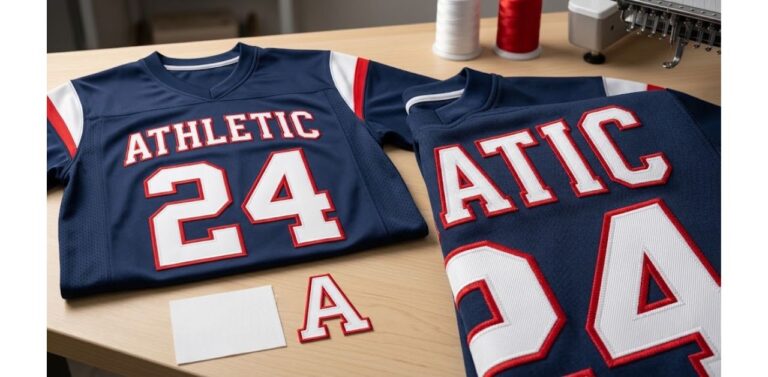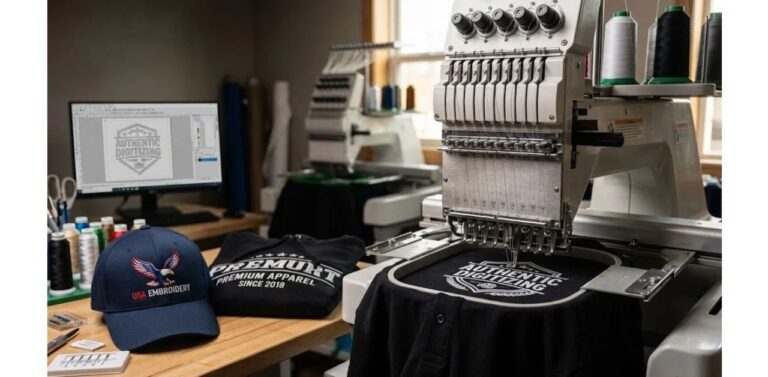
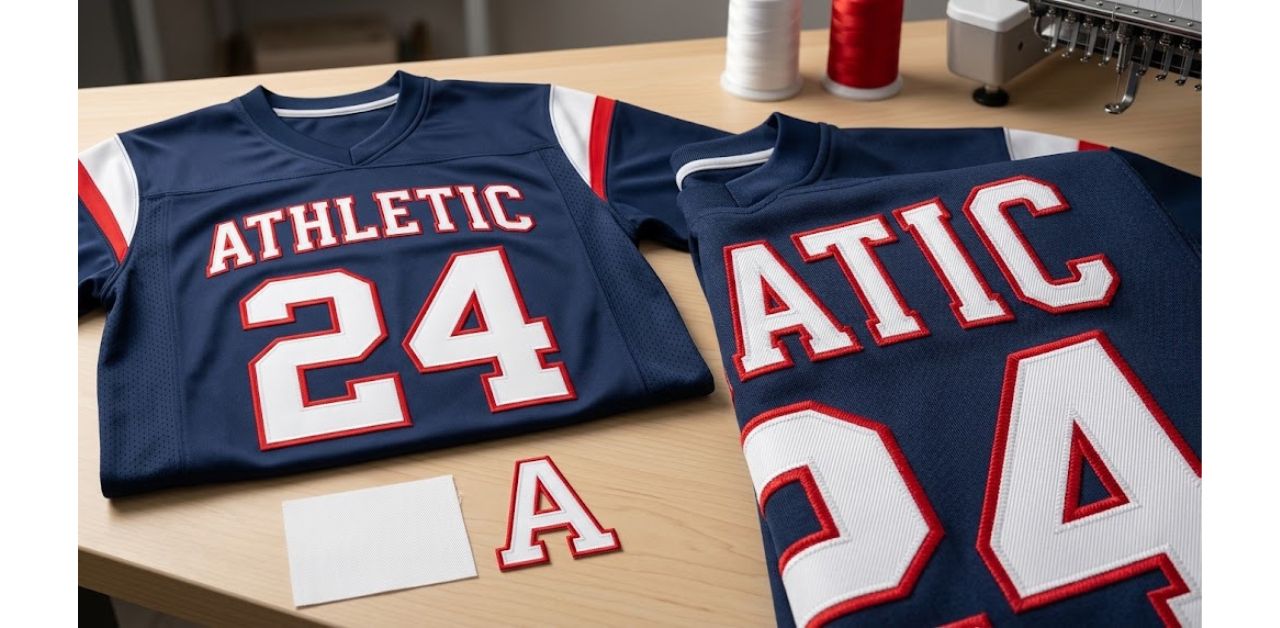
Tackle twill is a tough polyester fabric with a diagonal weave that is used for lettering on professional athletic jerseys. It is done through the use of an applique embroidery process with the help of placement, tack-down, and satin stitches to avoid fraying. Achieving this level of precision requires expert applique digitizing, combining both embroidery stitch files and vector cut files to streamline production.
What Is Tackle Twill?
Tackle twill is a special type of twill weave fabric, usually made of polyester, rayon, or a strong combination of both, characterized by a distinctive diagonal weave. The fabric is cut in shapes of team names, numbers, or logos and then sewn onto garments. Often, this kind of fabric is provided with a layer of heat-activated adhesive on the backside, allowing decorators to temporarily attach the pieces onto the garment before doing embroidery on an embroidery machine.
Originating from collegiate athletics and traditional varsity clothing, this textile is the foundation for team branding today since it maintains its form under great strain. To discover more information about this decorative sewing technique, visit our detailed guide on What is Applique Embroidery?.
How Tackle Twill Differs From Regular Applique
Tackle twill is a form of applique embroidery created especially for clear sports lettering instead of soft decorative embroidery. While traditional applique embroidery is made of softer materials such as felt, tackle twill uses a special weaving technique.
| Feature | Tackle Twill | Regular Applique |
|---|---|---|
| Fabric | Polyester or rayon twill | Felt, cotton, or other fabrics |
| Best For | Letters, numbers, team logos | Large shapes, patches, decorative art |
| Cutting | Laser or plotter cut | Hand, die, or laser cut |
| Edge Finish | Tight satin stitch border | Satin, zigzag, or blanket stitch |
| Appearance | Bold, defined athletic lettering | Soft, textured, varied designs |
| Typical Garments | Sports jerseys, varsity jackets | Kids’ wear, home decor, apparel |
Note: Always check the fabric backing specifications according to the supplier.
Tackle twill handles tight curves and sharp angles far better than regular cotton or felt, ensuring clean, crisp edges even on smaller text sizes. For more information about the technical aspects, we recommend our guide on exploring the art of applique digitizing.
Where Tackle Twill Is Used: Jersey Lettering and Beyond
Jersey lettering is the main application of tackle twill. It allows both professional and amateur sports teams to look professional. As there is a need for perfect uniformity for the whole roster, this material guarantees that all player names and numbers are absolutely the same throughout all the jerseys.
- Team Sports: Football, basketball, baseball, and soccer jerseys with names and numbers of players.
- School & Club Uniforms: The classic varsity jackets and the letterman jackets, along with cheerleading uniforms and heavy-duty hoodies.
- Merchandise: Team sportswear for schools and corporate organizations.
Teams like this system as it allows for a very professional look, can withstand rough physical handling, and scales up easily for entire teams. To achieve efficient production of these types of uniforms, the expertise in applique digitizing will play an important role in the middle of your process flow.
How Tackle Twill Is Stitched Down
Attaching tackle twill to clothing involves following an exact process that takes three steps utilizing the machine, based on expert applique embroidery digitizing to stop fabric shifting:
- Placement Stitch: The sewing machine applies an outline in one pass only on the backing or garment so the operator knows where to place the precut twill fabric.
- Tack-Down Stitch: This stitch locks the fabric piece temporarily in place so that it does not move during high-speed stitching.
- Satin Stitch Border: A thick, looping column stitch is stitched on top of the cut fabric to lock the fabric in place and create a professional look.
A professional digitizer must use proper underlay and pull compensation. For businesses seeking top-tier quality, outsourcing to reliable applique digitizing services can streamline operations and prevent raw edges from fraying over time. To learn more about setting up these files, explore our guide on how to digitize applique designs.
Is Tackle Twill Durable?
When properly manufactured with the use of high-quality machines and materials, tackle twill will be very durable and long-lasting. It can handle the harsh conditions experienced during sport, such as sweating, stretching, rough handling, and factory washings.
However, there are three very important elements for durability:
- Quality of Fabric: The superior quality of polyester twill doesn’t fade, shrink, or deteriorate.
- Strength of Backing: Good heat seal adhesive will ensure that there is no movement while sewing happens rapidly.
- Digital Border Density: A sufficient number of stitches and adjustments prevent the satin border from damaging the fabric while keeping it tight.
Care Tip: To maintain the custom-made jerseys’ durability, they must be washed in cold water and on a low-temperature dryer or hand-dried.
How Tackle Twill Digitizing Works
Transforming the raw artwork into a production-ready product needs specific technical skills. In tackle twill digitizing, experts map out all mechanical movements of the embroidery machine.
The digitizer meticulously outlines:
- Cut Lines: Precise cutting lines for use by laser cutters and plotters.
- Coordinates for Placement & Tacking Down: Guaranteeing perfect registration between the fabric piece and the garment.
- Width and Density of Border: Setting satin stitch parameters to enclose the edge fully.
- Stitch Angles and Compensation: Regulating fabric stretch to prevent wrinkling.
Choosing the right partner makes all the difference in workflow efficiency. To see how our workflow handles complex multi-layer projects, see our full Applique Embroidery Digitizing Services.
Files You Need for Tackle Twill Lettering
Producing flawless jersey lettering requires two distinct file types that work in tandem:
- Embroidery File: Formats like DST, PES, EXP, or your machine’s native extension to guide the sewing sequence.
- Cut File: Vector formats such as AI, EPS, SVG, or DXF used by laser cutters and vinyl plotters to slice the twill material.
Both files must match in exact scale, orientation, and registration coordinates. Always send the digitizer with your orders, a clear checklist specifying your font or artwork, final letter size, fabric on which the lettering should be printed, thread colors, and the machine format. Providing high-resolution vector artwork will guarantee faster delivery.
Get Tackle Twill Files From Infinite Digitizing
Infinite Digitizing provides efficient solutions for team uniform stores, decorators, and embroidery businesses nationwide to streamline their production lines. Our production team offers you precise tackle twill and applique files, accurate cut files, fast turnaround, and timely client revisions.
Whether you are outfitting a local high school football team or producing bulk corporate merchandise, our applique embroidery digitizing services provide the technical accuracy you need. For businesses looking for reliable applique digitizing services in the USA, our expert workflow ensures smooth production and superior jersey lettering.
Final Takeaways
Tackle twill is the ultimate gold standard in professional athletic clothing, as it offers a strong, diagonal fabric along with applique embroidery techniques. With coordinated embroidery and vector cut files, team jersey manufacturers produce durable lettering that will not get frayed during any sports activity, ensuring that all of your team members look unified.
Maximize jersey quality and production speed with Infinite Digitizing’s expert tackle twill files, precision cut lines, and reliable turnaround service.
FAQs
1. What is tackle twill?
A: Tackle twill is a layered polyester or rayon twill fabric featuring a distinct diagonal weave, cut into customized shapes and sewn onto garments for jersey lettering.
2. How is tackle twill different from regular applique?
A: While tackle twill is a form of applique embroidery, it is engineered for sharp athletic lettering, whereas regular applique often uses softer fabrics like cotton or felt.
3. What stitch is used to sew down tackle twill?
A: Securing tackle twill requires a placement stitch, a tack-down stitch, and a dense satin stitch border that seals the raw edges.
4. Is tackle twill durable for sports jerseys?
A: Yes, tackle twill withstands heavy contact play and washing when supported by quality fabric and proper border density.
5. What file do you need for tackle twill lettering?
A: You need an embroidery stitch file for the machine and a vector cut file for the laser cutter or plotter.