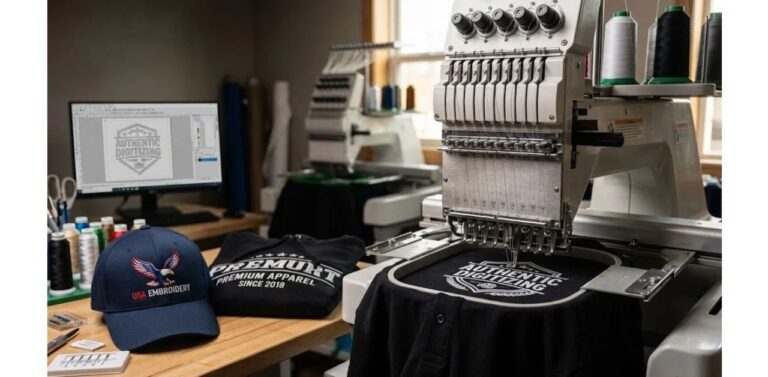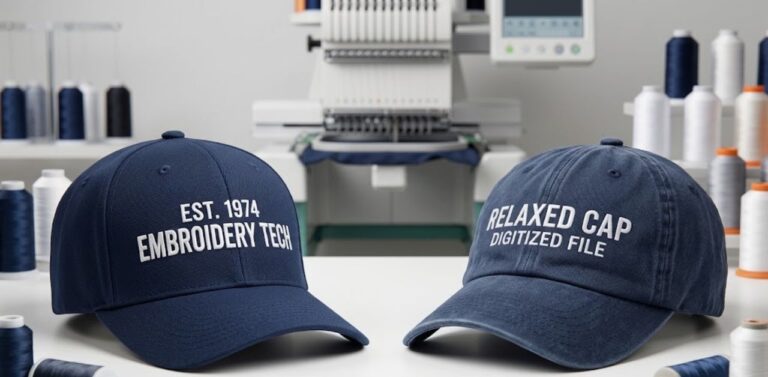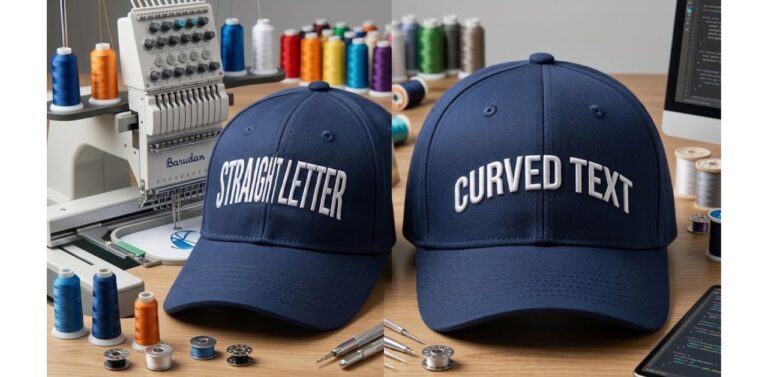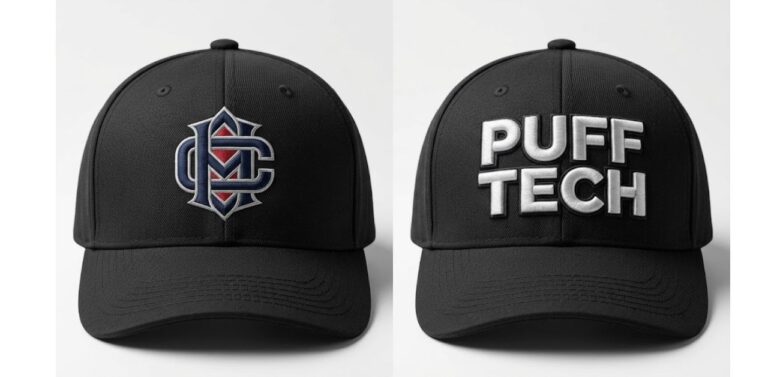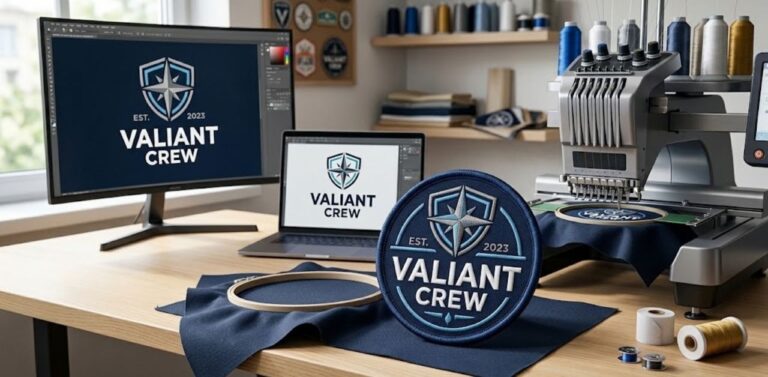
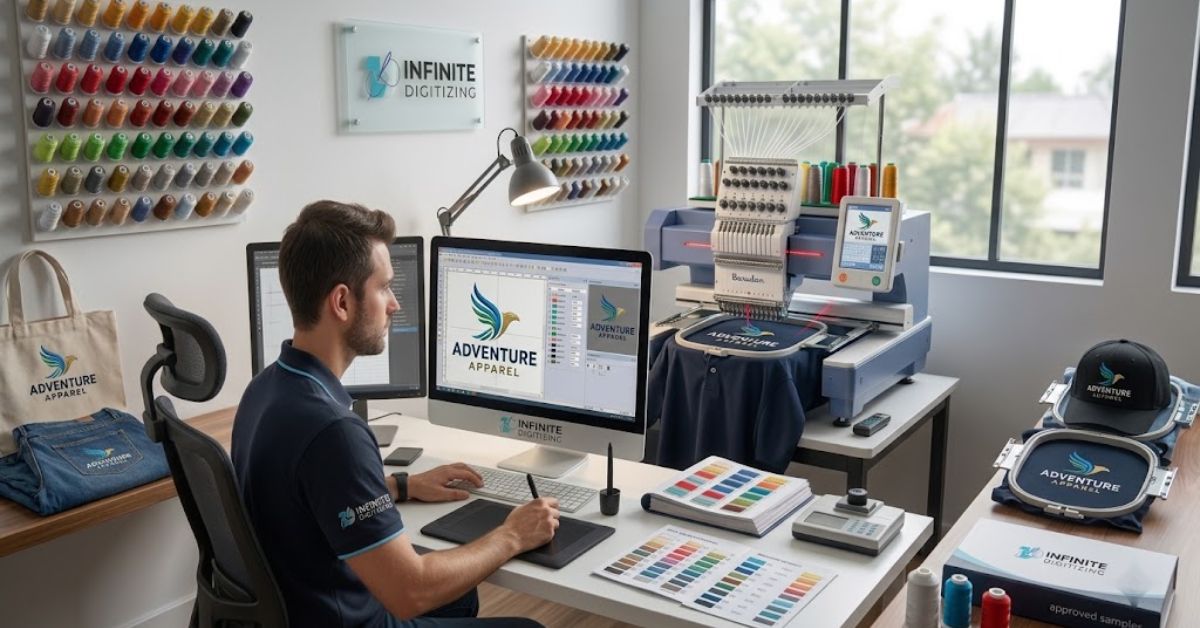
If you use a regular company logo in the embroidery machine, it will not work because sewing machines do not recognize standard image files. Utilizing dependable embroidery digitizing services bridges that gap. Relying on professional stitching skills will keep your brand images intact; digital plotting will ensure flawless printing on caps and polo shirts, and professional file preparation will make sure your whole manufacturing process will be free of any delays.
Embroidery Digitizing: What You Really Need to Know
At its core, digitizing for embroidery turns flat art into numerical coordinates that industrial sewing equipment understands. Every stitch is carefully calculated to account for fabric, thread, and machine movement.
- Every single needle drop creates tension in the underlying textile.
- Machine Embroidery depends entirely on correct density settings and hidden underlay stitches.
- Ignore this process, and the stitches will go straight through the knitted shirts or warp the light hats.
Do you want to learn more about the technical process? Check out the guide on What Is Embroidery Digitizing?.
Why Professional Embroidery Digitizing Matters
Consistent branding builds trust. Utilizing a professional embroidery digitizing service guarantees your logos look identical whether they land on small left-chest employee uniforms or massive jacket backs.
- Precision Engineering: Proper stitch counts stop thread breaks and fabric puckering cold during high-speed runs.
- Batch Consistency: Every single cap or polo matches your exact brand standard across thousands of units.
- Fast Turnarounds: Infinite Digitizing delivers standard files quickly, backed by flexible urgent rush service options.
- Format Flexibility: Full native support for DST, PES, EMB, and every major industrial sewing machine format.
- Thread Optimization: Tailored density settings meticulously calibrated for rayon, polyester, metallic, and specialty decorative threads.
When comparing professional digitizing options, consider factors such as stitch quality, machine compatibility, file formats, turnaround expectations, and quality-control practices. For more guidance, read our guide on How to Choose the Best Embroidery Digitizing Services for Your Needs.
The Risks of DIY or Amateur Digitizing
Saving a few dollars with free auto-punch software sounds tempting at first glance. However, automated tools lack human judgment, bunching stitches too tightly together or missing structural underlay entirely.
- Wasted Materials: Frayed threads, needle jams, and ruined garments stack up fast.
- Constant Stoppages: Poorly compiled files cause machine errors that kill your daily operational workflow.
- Warped Lettering: Open gaps in fill areas ruin the final professional appearance of your brand assets.
Partnering with the best embroidery digitizing service prevents these expensive headaches. To understand how fabric stretches under needle pressure, read our breakdown on Push-Pull Compensation.
Machine Embroidery vs Hand-Drawn Artwork: Why Digitizing Matters
A graphic can look stunning on a high-definition monitor and still fail miserably on fabric. Machine Embroidery reads physical thread paths instead of passive pixels.
- Manual Curve Adjustments: Every single curve requires careful manual handling by a trained expert.
- Fabric Behavior Analysis: Gradients and micro-text need a human digitizer who genuinely understands how textiles stretch and react under tension.
- Vector Cleanup: Low-quality source files require professional Vector Art Services to clean up the baseline artwork before the actual stitch mapping begins.
What Makes Professional Digitizing Different
Professional digitizing involves more than converting artwork into stitches. The quality of the final embroidery depends on how the design is planned for its size, fabric, thread, and intended application.
- Manual Quality Checks: Reviewing stitch paths, density, sequencing, trims, and underlay can help identify potential production issues before embroidery.
- Fabric-Specific Planning: Different materials such as fleece, canvas, caps, and lightweight garments may require different stitch settings and design adjustments.
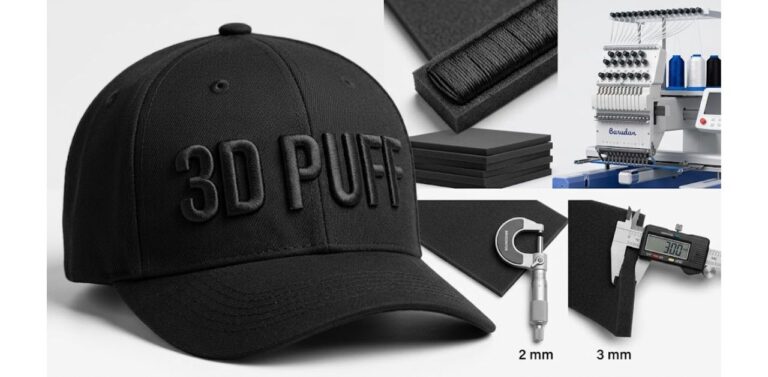
- Specialized Textures: Techniques such as 3D puff, appliqué, and detailed fills require different approaches to stitch placement and structure.
- Design Simplification: Very small details or complex artwork may need adjustments so they remain clear and recognizable when converted into stitches.
Understanding these factors can help you evaluate the quality of an embroidery digitizing workflow and avoid common production problems.
DIY Digitizing vs Professional Digitizing: Side-by-Side
| Factor | DIY / Amateur Digitizing | Professional Digitizing |
|---|---|---|
| Stitch Accuracy | May require trial and error | Planned stitch direction, density, and underlay |
| Learning Curve | Requires time to learn software and techniques | Handled by an experienced digitizer |
| Machine Compatibility | File settings may need additional adjustments | File prepared according to the intended machine and format |
| Quality Control | Usually depends on the creator’s own review | Design can be reviewed for density, sequencing, trims, and other issues |
| Fabric Considerations | Fabric behavior may be overlooked | Stitching can be planned around fabric type and application |
| Production Risk | Greater chance of thread breaks, puckering, or distorted details | Proper planning can reduce common embroidery problems |
What to Expect From a Professional Digitizing Workflow
Professional embroidery digitizing is more than simply converting artwork into stitches. A well-prepared design requires decisions about stitch types, density, underlay, pull compensation, thread direction, and the fabric on which the design will be embroidered.
A professional workflow typically includes:
- Artwork preparation: The original artwork is reviewed and adjusted so important details can be translated effectively into stitches.
- Stitch planning: Different areas of a design may require satin, fill, or other stitch types depending on their shape, size, and intended embroidery application.
- Machine compatibility: The finished file should be prepared in the appropriate embroidery format for the machine and production setup.
- Quality review: The digitized design is checked for potential issues such as excessive density, unnecessary trims, poor sequencing, or details that may not reproduce well during stitching.
- Production considerations: Fabric type, design placement, thread selection, and stabilizer can all affect the final embroidered result.
These steps help turn artwork into a practical embroidery file that is easier to produce consistently and with fewer avoidable stitching problems.
Conclusion
Professional embroidery digitizing helps translate artwork into stitch patterns that are better suited to real fabrics, threads, and embroidery machines. Proper stitch planning, density, underlay, sequencing, and quality checks can reduce common production problems such as thread breaks, puckering, gaps, and distorted details.
Whether you digitize designs yourself or work with a professional, understanding these factors helps you make better decisions and achieve more consistent embroidery results.
FAQs
1. Why is professional embroidery digitizing important?
Professional embroidery digitizing converts artwork into stitch instructions that an embroidery machine can follow. Proper planning of stitch direction, density, underlay, and sequencing helps the design reproduce more accurately on fabric.
2. Can poor digitizing affect embroidery quality?
A: Yes. Poorly planned designs can lead to thread breaks, fabric puckering, gaps, distorted lettering, excessive stitch density, or unnecessary trims. These problems often become more noticeable when a design is embroidered repeatedly.
3. What are the main benefits of professional digitizing?
A: Professional digitizing can improve stitch consistency, fabric compatibility, design clarity, and production reliability. It also allows the artwork to be adjusted for different sizes, materials, and embroidery applications.
4. How do digitizers improve stitch quality?
A: Digitizers consider factors such as stitch direction, density, underlay, pull compensation, sequencing, and fabric behavior. These settings help control how thread interacts with the material during embroidery.
5. Who can benefit from professional embroidery digitizing?
A: Businesses, apparel brands, embroiderers, promotional-product companies, uniform suppliers, and individuals can benefit from properly prepared embroidery files for garments, caps, jackets, patches, and other applications.
6. Which embroidery file formats are commonly used?
A: Common embroidery formats include DST, PES, EXP, JEF, HUS, VP3, and XXX. The appropriate format depends on the embroidery machine or software being used.
7. Does every embroidery design work on every fabric?
A: No. Fabric type can affect stitch density, underlay, pull compensation, and design construction. A design intended for a structured cap may need different settings from one intended for a lightweight garment.
8. What should I check before using an embroidery file?
A: Check that the file format matches your machine, the design size is appropriate for the intended placement, and the stitch settings are suitable for the fabric. A test sew-out can also help identify problems before full production.