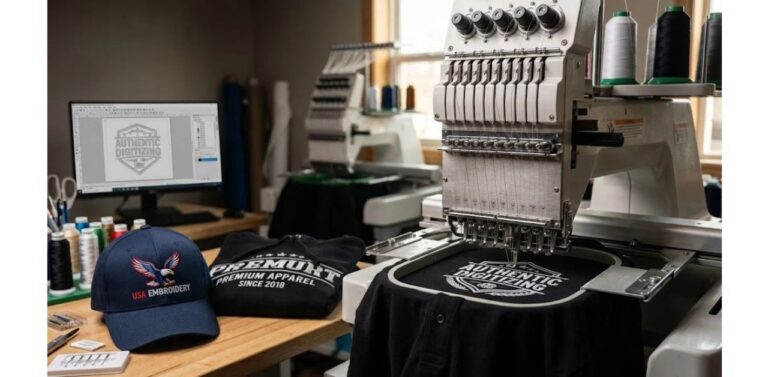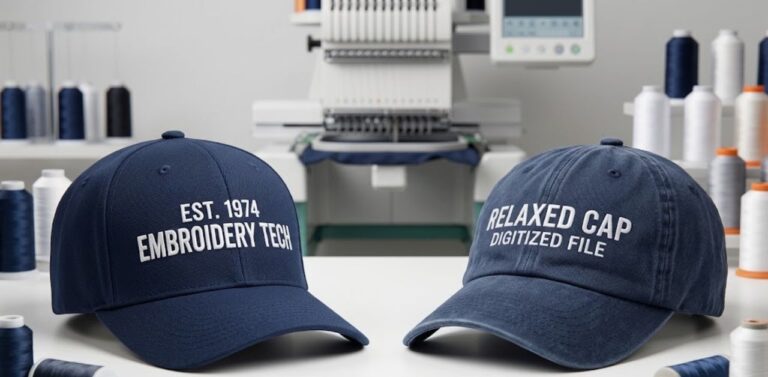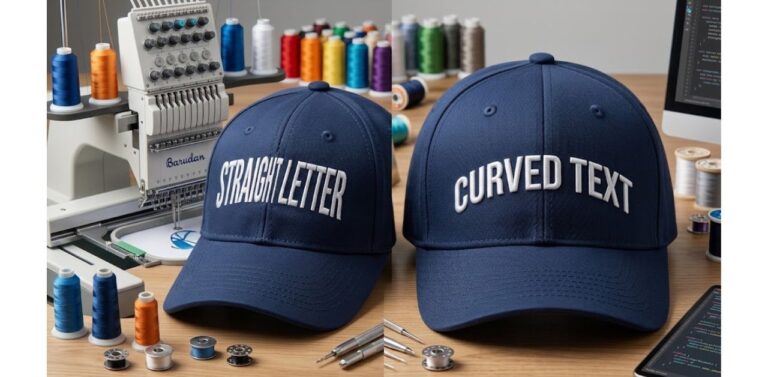
When your team wears clothes with your company logo, it shows how professional your business is. Getting the ideal look on rough uniforms needs more than just a picture. With our professional custom embroidery digitizing, we convert your designs into precise patterns for stitching. Our premium embroidery digitizing services ensure your brand remains clear and lasts through rigorous daily use.
Why Workwear and Uniform Logos Need Proper Digitizing
Workplace professionalism begins with the outward appearance of its employees. The purpose of Workwear with a company’s logo is to keep it clear and readable through many industrial washings.
- Machine Compatibility: Embroidery equipment cannot recognize regular images like JPG or PNG files. They require specific stitch-path files created through professional digitization. If you are unsure which format your machine needs, check our guide on the best file format for embroidery digitizing.
- Durability: Proper digitizing makes sure that there will be no puckering, stitch misalignment, or thread breakage.
- Brand Consistency: An embroidery digitizing company will ensure that your logo on all the garments of your bulk order looks alike.
- Fabric Integrity: Precise digitizing prevents damage to high-performance fabrics such as polyester and hi-vis fabrics due to excessive penetration of needles.
Discover the essential basics of this process by reading our comprehensive guide: What Is Embroidery Digitizing today.
How Custom Embroidery Digitizing Works: Step by Step
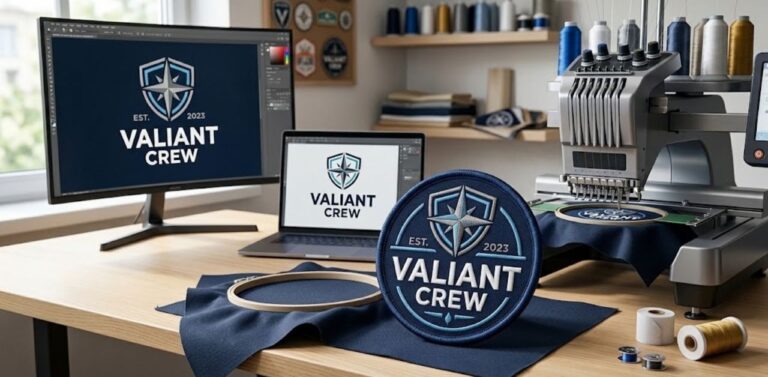
It is a technological technique to transform a flat image into a superior embroidery design. To guarantee success, skilled embroidery digitizers adhere to a methodical workflow:
- Logo Submission: To guarantee the highest level of detail, we manually retrace raster files or examine your vector files (AI, EPS, PDF) for clean lines.
- Stitch Planning: We carefully plan where the needle will go and choose the best types of stitches based on how complicated your logo is.
- Fabric Compensation: We adjust density and pull compensation specifically for the material being used.
- Test Sew-Out: We test stitch out your embroidery design on fabric in order to ensure proper alignment and quality before providing your file.
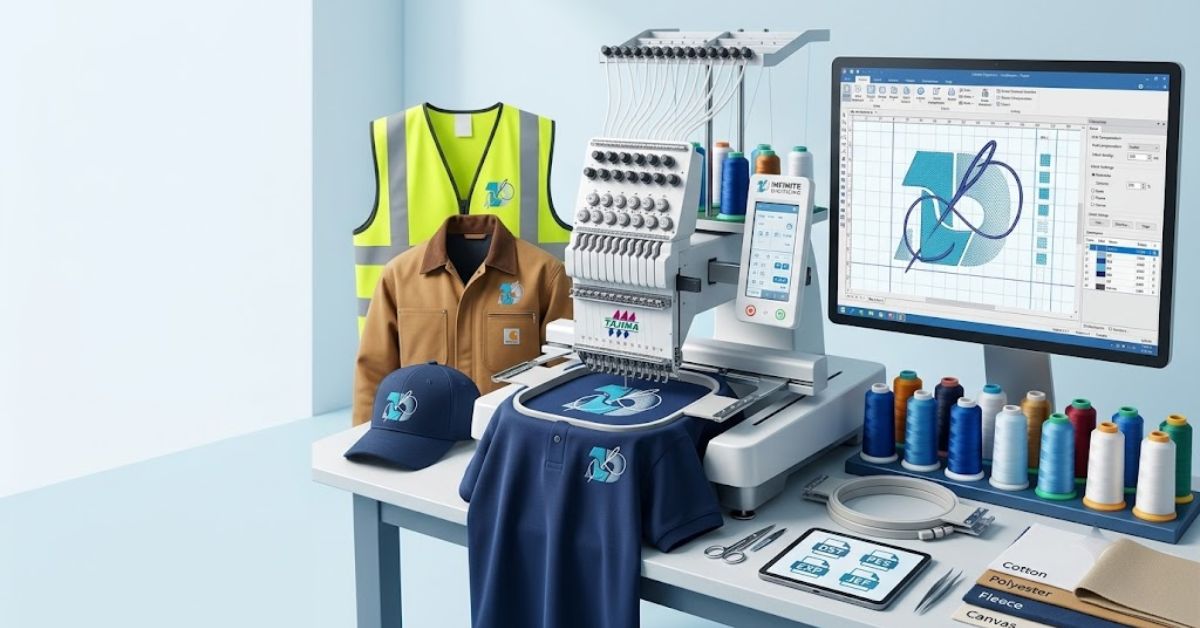
- File Export: You get your design back in the required file format that can be used by your embroidery machines (DST, PES, EXP, or JEF).
Follow our comprehensive guide on digitizing file formats to understand industry standards for your custom embroidery design projects today.
Best Stitch Types for Workwear Logos
Different elements of your logo require different technical approaches to ensure Logo Embroidery excellence.
| Stitch Type | Best For | Detail Level |
|---|---|---|
| Satin Stitch | Text, thin borders, small logo elements | High |
| Fill (Tatami) | Large logo areas, solid shapes | Medium |
| Running Stitch | Fine outlines, background detail | Low |
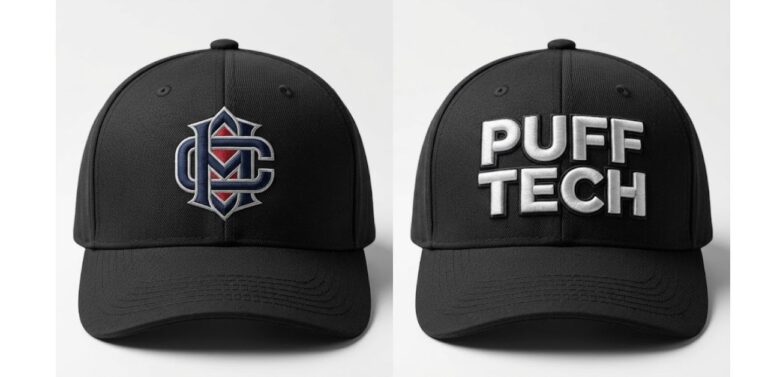
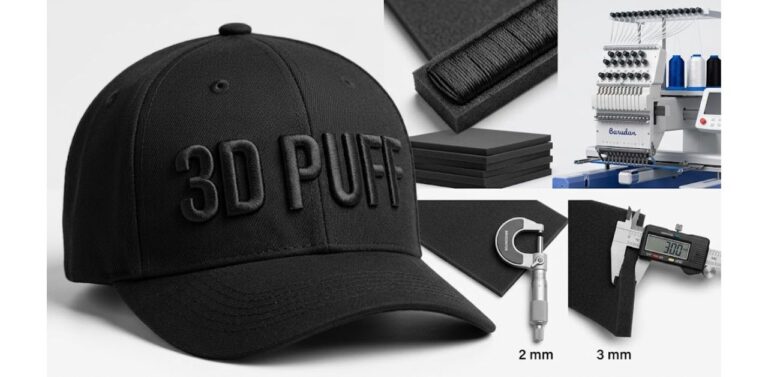
| 3D Puff | Raised caps, bold uniform patches | High impact |
When looking for the best custom embroidery digitizing services in the USA, experts ensure satin stitches are not too wide on heavy fabrics, preventing thread sagging or snapping.
Matching Digitizing Settings to Uniform Fabrics
Settings must be tailored to the specific material to avoid pulling or puckering. When searching for embroidery digitizing services in the USA, ensure your partner understands these nuances:
| Fabric Type | Challenge | Digitizing Adjustment |
|---|---|---|
| Cotton (Polos/Jackets) | Stable, low stretch | Standard density |
| Polyester / Hi-Vis | Slippery surface | Reduced pull, topping recommended |
| Fleece | Looped surface | Higher underlay, shorter stitches |
| Ripstop / Canvas | Dense weave | Heavier needle path, wider satin |
| Pique Knit | Textured surface | Topping layer essential |
Properly choosing a partner is crucial; learn more in our guide: How to Choose the Best Embroidery Digitizing Services for Your Needs.
Common Mistakes That Ruin Workwear Logo Embroidery
Many businesses lose money by choosing cheap, automated software. These tools often fail to interpret complex curves, leading to sloppy results that don’t last.
- Auto-Digitizing: Software often misreads small text, causing it to blur after only a few wash cycles.
- Missing Underlay: Without proper underlay, logos will lift or distort on stretchable fabrics.
- Ignoring Detail Size: Elements under 0.5 cm often disappear if the stitch settings aren’t manually optimized.
- Skipping the Sew-Out: Relying on digital previews instead of a physical test run leads to issues surfacing only after a full uniform batch is stitched.
Why Businesses Choose Infinite Digitizing for Uniform Programs
As a top embroidery digitizing company, we understand that your workwear acts like a moving advertisement for your brand. We concentrate on manual and professional outcomes, not fast and automatic solutions.
- Expert Craftsmanship: All our logos are manually converted by specialists.
- Universal Compatibility: We supply you with files that can be used with any equipment (DST, PES, EXP, JEF).
- Fast Turnaround: We have a quick processing system for bulk uniform order production.
- Free Revisions: We will keep working until your design looks just right, so you’ll be completely happy.
If you are searching for embroidery digitizing services in the USA that prioritize quality, reach out to us today to start your next project.
Conclusion
Putting money into good digitization is the best way to keep your uniforms looking neat and professional for a long time. By selecting careful and skilled people instead of using quick automated tools, you help keep your brand strong and lasting. Get in touch with us today for expert digitizing that makes your business look great, again and again.
Elevate your brand with Infinite Digitizing, where expert manual craftsmanship ensures durable, crisp, and consistent professional uniform logos.
FAQs
1. How are logos digitized for embroidery?
A: Experts manually map stitch paths and settings, converting images into machine-readable format files like DST or PES.
2. What makes a logo suitable for embroidery?
A: Clean vector lines, appropriate color separation, and elements designed with minimum physical size constraints in mind.
3. How do you digitize small text for embroidery?
A: By using high-density satin stitches and manually adjusting pull compensation to maintain character sharpness and readability.
4. Why is logo digitizing important for uniforms?
A: It ensures durability, prevents fabric damage, and maintains professional brand consistency throughout repeated industrial washes.